
Low-cost Water Monitoring Sensors make it possible to monitor large areas at a fraction of the cost, yet understanding their limitations is critical to ensure reliable and actionable insights where precision and compliance are essential. Leadmed Technology provides a full range of both industrial-grade and cost-effective water monitoring sensors, enabling organizations to implement scalable, accurate, and dependable water quality networks. Whether the goal is dense environmental coverage, early warning detection, or strict regulatory compliance, knowing when to deploy each sensor type allows water managers to balance cost, reliability, and data quality effectively.
Low-cost water sensors have grown in popularity over the last decade, particularly for distributed environmental monitoring, smart city initiatives, and citizen science applications. Their affordability allows for dense sensor deployment across rivers, reservoirs, irrigation networks, and urban drainage systems. These networks are ideal for trend detection, anomaly spotting, and early warning alerts.
Industrial-grade Water Monitoring Sensors, however, remain essential for critical applications. They are necessary in municipal water treatment plants, industrial effluent monitoring, and regulatory compliance scenarios. These sensors deliver precise, stable, and highly reliable measurements, ensuring confidence for decision-making, audit reporting, and compliance with stringent environmental or industrial standards. By clearly distinguishing the roles of low-cost versus industrial sensors, organizations can optimize network design and operational efficiency while avoiding data gaps or misinterpretation.
Performance is the most significant difference between low-cost and industrial sensors. Industrial Water Monitoring Sensors offer:
High measurement accuracy across pH, dissolved oxygen, conductivity, turbidity, residual chlorine, and other critical parameters.
Minimal drift over time, reducing the need for frequent recalibration.
Fine detection limits capable of identifying subtle changes in water chemistry or contamination events.
In contrast, low-cost water sensors may exhibit wider tolerances, higher drift rates, and less sensitivity. They typically require more frequent calibration or replacement and may not capture minor fluctuations in key parameters. However, for applications focused on trend monitoring, early warning, or preliminary surveys, these sensors often provide sufficient performance.
“Good enough” performance depends on context:
Low-cost sensors excel at widespread monitoring, capturing trends and identifying areas requiring further investigation.
Industrial sensors are required for precise measurements, compliance with legal standards, and operational decisions in water treatment or industrial processes.
Understanding these distinctions helps water managers deploy the right sensor in the right location while maintaining confidence in the data collected.
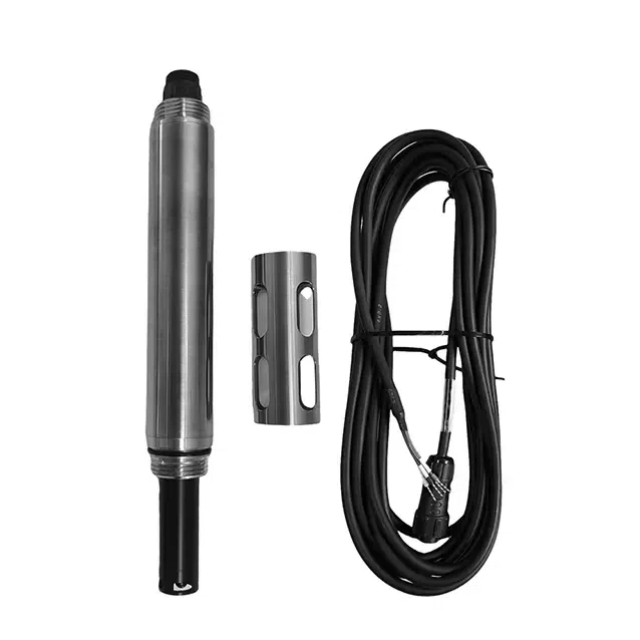
Durability is another critical factor differentiating sensor types. Industrial Water Monitoring Sensors are designed with rugged housings, corrosion-resistant materials, and high ingress protection (IP) ratings, enabling long-term deployment in harsh chemical, thermal, or abrasive environments. Anti-fouling mechanisms, such as mechanical wipers, protective coatings, or self-cleaning surfaces, reduce maintenance demands and extend operational lifespan.
Low-cost water sensors, while more affordable, often have simpler construction, lighter materials, and less resistance to fouling or environmental stress. They are best suited to moderate conditions or for temporary or supplementary monitoring. By considering materials compatibility, fouling resistance, and environmental exposure, operators can ensure long-term reliability and consistent data collection across all deployment scenarios.
Maintenance requirements vary significantly between sensor types. Industrial sensors often require less frequent intervention due to their anti-fouling design and self-check features, while low-cost sensors may need more regular cleaning, recalibration, or replacement. Factoring in maintenance effort is essential when planning large networks to avoid data gaps and ensure operational efficiency.
Low-cost sensor networks need robust validation to guarantee confidence in collected data. Key strategies include:
Spot checks: Periodic manual measurements to verify sensor readings.
Co-location: Positioning low-cost sensors alongside industrial-grade reference sensors to identify biases and correct drift.
Cross-validation: Comparing readings from multiple low-cost nodes in the same area to identify anomalies or malfunctioning sensors.
Validation ensures that even large, low-cost networks provide actionable information and avoids misinterpretation of trends or alerts.
A hybrid approach is often the most effective strategy. Low-cost nodes provide broad coverage, while industrial-grade reference sensors act as anchors for calibration, benchmarking, and data validation. Leadmed Technology sensors are designed for seamless integration, enabling operators to mix cost-effective coverage with high-precision reference points. This approach allows large-scale deployment without sacrificing accuracy, making it ideal for municipal networks, irrigation systems, environmental monitoring, and industrial applications.
Selecting the appropriate sensor type depends on the specific monitoring objectives and environmental conditions:
Flood warning networks: Dense arrays of low-cost sensors can detect rising water levels, turbidity, or sudden changes in chemical parameters, providing early alerts to authorities.
Irrigation and agricultural networks: Low-cost sensors monitor soil and water conditions, helping optimize water usage while reducing operational costs.
Coastal and environmental monitoring: Distributed low-cost sensors provide trend data for pH, salinity, temperature, or dissolved oxygen, supporting research and environmental management.
Factory effluent control: Industrial-grade sensors ensure precise, continuous monitoring of chemical and physical parameters to meet discharge limits and regulatory requirements.
Municipal water treatment: Critical points in treatment plants require industrial sensors for high-accuracy monitoring, compliance reporting, and process optimization.
By matching sensor type to deployment scenario, operators can design a network that achieves both scale and reliability, minimizing costs while maximizing operational effectiveness.
In addition to selecting the right sensor type, network design plays a crucial role in achieving reliable monitoring. Redundant placement, strategic co-location with reference sensors, and optimized data routing ensure that even low-cost networks provide actionable insights. Leadmed Technology supports network planning with a range of multi-parameter and single-parameter sensors, offering flexible configurations for all deployment scales.
Choosing between low-cost and industrial Water Monitoring Sensors involves balancing coverage, precision, durability, and validation needs. Low-cost sensors enable widespread monitoring and early warning capabilities, making them ideal for environmental studies, irrigation networks, or broad distributed monitoring. Industrial-grade sensors provide high accuracy, stability, and robustness, essential for regulatory compliance, process control, and critical operational decisions. Many organizations adopt a hybrid strategy, deploying low-cost nodes for broad coverage while using industrial sensors as reference points for calibration and validation. Leadmed Technology’s diverse sensor portfolio allows operators to implement scalable, reliable, and precise monitoring networks tailored to specific operational needs. Contact us to explore how our sensors can help design the right balance between coverage and precision, ensuring actionable, trustworthy water quality data across your network.
