
Water is essential for life, but its quality is often compromised. How can we efficiently monitor it?
This article introduces Multiparameter Sensors—tools that measure multiple water quality parameters at once.
We’ll discuss their functionality, components, and real-world applications. By the end, you'll understand how these sensors contribute to sustainable water management.
A Multiparameter Water Quality Sensor combines multiple measurement capabilities into one device. It measures various water quality parameters like pH, turbidity, dissolved oxygen (DO), conductivity, temperature, and more. This integrated approach reduces the need for separate sensors, making it an efficient solution for monitoring a wide range of water quality indicators.
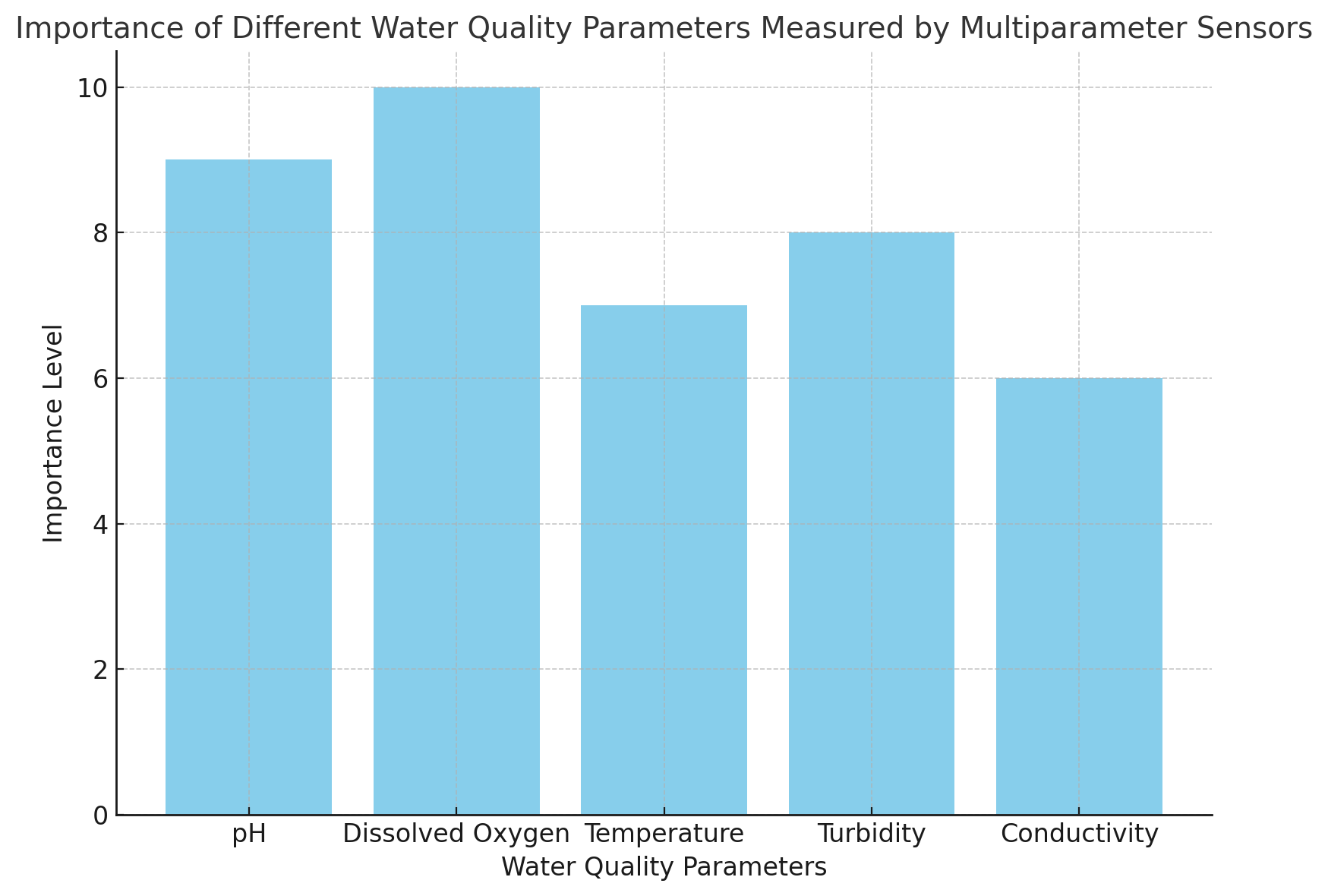
These sensors typically measure the following parameters:
● pH: Indicates the acidity or alkalinity of water.
● Dissolved Oxygen (DO): Vital for aquatic life; its level can indicate water health.
● Temperature: Affects water chemistry and biological processes.
● Turbidity: Measures water clarity, indicating suspended particles.
● Conductivity: Reflects the water's ability to conduct electricity, related to dissolved salts and minerals.
Multiparameter sensors use various sensor technologies such as ion-selective electrodes, optical sensors, and thermistors. Each sensor measures a specific water quality parameter. The sensors send data to a central processing unit, which then interprets the readings. The result is continuous real-time data, helping users make timely decisions based on the water’s condition.
Parameter | Description | Importance |
pH | Measures the acidity or alkalinity of water, critical for aquatic life. | Impacts water chemistry and ecosystem balance. |
Temperature | Affects chemical reactions, biological processes, and solubility of gases. | Affects aquatic organisms and industrial processes. |
Dissolved Oxygen | Essential for aquatic organisms' survival, indicates water health. | Vital for aquatic life and pollution detection. |
Turbidity | Indicates water clarity, affected by suspended particles or pathogens. | Indicates pollution and impacts aquatic ecosystems. |
Conductivity | Measures ion concentration, used to assess salinity and dissolved solids. | Used for water quality assessment in various environments. |
Multiparameter sensors incorporate different sensor types, each designed for specific measurements:
● Ion-selective electrodes: For measuring pH, conductivity, and dissolved ions.
● Optical sensors: For turbidity, chlorophyll, and other optical measurements.
● Thermistors: For measuring water temperature.
These sensors work together to gather data on multiple parameters simultaneously.
The sensors are connected to an electronic system that processes and analyzes the data. The system includes amplifiers, signal conditioning circuits, and analog-to-digital converters (ADC) to transform raw sensor data into readable output. Power for the device can come from either a battery or direct current (DC), depending on the sensor’s design.
The software plays an essential role in interpreting and displaying the data. It collects measurements from each sensor, processes them, and presents the data either on a local display or via a connected monitoring system. In many advanced models, the software also sends data remotely for continuous monitoring.
One of the most significant advantages of multiparameter sensors is their ability to provide real-time data. These sensors continuously collect water quality data, ensuring timely responses to any changes in the water quality. This continuous monitoring is crucial for detecting pollutants and preventing potential environmental damage.
After data collection, the readings are transmitted to a central system or monitoring station. This system can be local or remote, allowing users to analyze and track water quality trends over time. Some advanced systems also send alerts when specific parameters fall outside acceptable ranges.
Proper calibration is essential for ensuring the accuracy of Multiparameter Sensors. Regular calibration checks are needed to adjust the sensors and maintain measurement accuracy. Maintenance involves cleaning the sensors to avoid fouling and ensuring the power supply remains stable for optimal performance.
Multiparameter sensors are invaluable tools in environmental monitoring. They are used in lakes, rivers, and oceans to detect pollutants, track water quality, and monitor ecological health. The ability to measure multiple parameters simultaneously helps researchers and environmentalists better understand how various factors affect water systems.
In industrial settings, Multiparameter Sensors play a critical role in water treatment plants, manufacturing processes, and cooling systems. They help monitor water quality to ensure compliance with environmental standards, detect leaks, and prevent equipment failure due to poor water quality.
Farmers rely on these sensors to monitor water quality in irrigation systems. By measuring parameters like dissolved oxygen, pH, and turbidity, they can optimize irrigation practices and enhance crop health, ensuring the efficient use of water resources.
Multiparameter sensors are widely used in wastewater treatment facilities to monitor the quality of treated water. By providing real-time data on parameters like dissolved oxygen, pH, and turbidity, these sensors help ensure that the water meets regulatory standards before being discharged into the environment.
Application Area | Description |
Environmental Monitoring | Used to monitor rivers, lakes, oceans, and detect pollutants. |
Industrial Applications | Used in water treatment plants, manufacturing, and aquaculture. |
Agriculture and Irrigation | Monitors water quality for irrigation systems, ensuring crop health. |
Wastewater Treatment | Helps monitor and maintain discharge regulations in treatment plants. |
Multiparameter sensors provide the benefit of measuring several parameters simultaneously, saving time and reducing the need for multiple devices. This efficiency makes them ideal for industries and researchers that require continuous, reliable data.
By consolidating the functionality of multiple sensors into one device, Multiparameter Sensors reduce the need for separate equipment. This results in cost savings, as fewer sensors are needed for comprehensive water quality monitoring.
These sensors offer real-time data collection, allowing for immediate actions to be taken if water quality deteriorates. Their accuracy ensures that the readings are reliable, enabling informed decision-making.
Multiparameter sensors can be used in a wide range of applications, from environmental monitoring to industrial processes. Their ability to measure different parameters simultaneously makes them adaptable to various environments.
Advancements in sensor technology, such as integration with AI and IoT, are enhancing the capabilities of Multiparameter Sensors. These innovations will allow for even more precise measurements, predictive maintenance, and smarter water management systems.
The demand for multiparameter sensors is expected to rise as industries and governments focus on sustainable water management. Future sensors will likely measure a broader range of contaminants and pollutants, providing even more comprehensive insights into water quality.
As part of smart water management solutions, Multiparameter Sensors are increasingly integrated with automated systems. This trend will revolutionize how water quality is monitored, enabling real-time adjustments and proactive management.
Multiparameter Sensors are vital for accurate and real-time water quality monitoring. They provide valuable data on multiple parameters simultaneously, benefiting various sectors. Industries, environmental agencies, and researchers should invest in these sensors for efficient water quality management. For reliable solutions, consider Multiparameter Sensors from Leadmed Technology, ensuring effective and sustainable water practices.
A: A Multiparameter Sensor measures multiple water quality parameters like pH, temperature, and dissolved oxygen simultaneously, providing comprehensive and real-time data for water quality monitoring.
A: Multiparameter Sensors collect data from different sensors integrated within one device, providing real-time readings that are transmitted for analysis and ensuring efficient water quality management.
A: These sensors provide accurate, real-time data on multiple water parameters, making them crucial for monitoring water bodies in industries like environmental protection and wastewater treatment.
A: Multiparameter Sensors save time and cost by offering simultaneous readings of various water parameters, improving decision-making and ensuring sustainable water quality management.
A: Yes, using a single Multiparameter Sensor instead of multiple single-parameter sensors significantly reduces both initial and maintenance costs, offering a cost-effective solution for water quality monitoring.
