
Proper installation and routine maintenance are fundamental to ensuring that Water Monitoring Sensors deliver accurate, reliable, and actionable data while maintaining long-term operational uptime. Even the most advanced sensors can fail to provide trustworthy readings if installed incorrectly or neglected. Leadmed Technology, a high-tech enterprise specializing in water quality monitoring systems, offers a full portfolio of sensors designed to simplify installation, reduce maintenance burdens, and maintain precision across municipal, industrial, and environmental applications. With intelligent signal processing, automatic compensation, anti-interference design, and robust construction, Leadmed sensors provide operators with the confidence that their water monitoring data is both accurate and audit-ready.
Water monitoring accuracy begins with correct installation. Poorly mounted sensors, improper immersion, or placement in turbulent or stagnant water can introduce errors and lead to misinterpretation of trends. Neglecting routine maintenance—such as delayed calibration, infrequent cleaning, or ignoring early signs of fouling—can reduce sensor lifespan and compromise data reliability. Proper installation combined with structured maintenance routines ensures consistent readings, minimizes downtime, and supports both operational decisions and regulatory compliance. In addition, documenting every installation and maintenance step ensures traceability and can be crucial for audits, compliance reporting, or quality assurance programs.
Before installing Water Monitoring Sensors, operators should evaluate site conditions to optimize performance:
Flow characteristics: Select locations with stable, representative water flow to avoid bubbles or stagnant zones.
Access: Ensure sensors are reachable for periodic maintenance, cleaning, and recalibration without disrupting surrounding infrastructure.
Power and mounting points: Confirm that reliable power sources are available and that sensors can be securely fastened to withstand vibrations, currents, or other environmental stresses.
Anti-vandal measures: In public or remote sites, protective housings, tamper-proof enclosures, or cages prevent accidental damage or unauthorized tampering.
Careful cable routing is essential for preventing mechanical strain, damage, or interference. Integrating surge protection safeguards electronics against voltage spikes caused by lightning, unstable electrical grids, or switching transients. Well-organized cabling also facilitates easier maintenance and troubleshooting. Planning cable routes with consideration for environmental exposure—such as UV, moisture, and physical hazards—can further enhance long-term reliability.
Correct sensor placement directly impacts measurement quality:
Orientation: Follow manufacturer specifications for vertical, horizontal, or angled mounting.
Immersion depth: Ensure proper submersion to measure parameters accurately, including pH, dissolved oxygen, conductivity, or turbidity.
Avoiding air entrainment and biofilm hotspots: Position sensors away from turbulence, bubbles, or areas prone to organic buildup to prevent fouling and inaccurate readings.
Flow considerations: Avoid placing sensors near sharp bends, pumps, or outflows that may generate irregular turbulence.
Proper attention to installation detail establishes the foundation for reliable, long-term sensor operation. Additionally, securing the sensors against vibration or mechanical shocks prevents gradual misalignment or damage that can subtly affect readings over time.
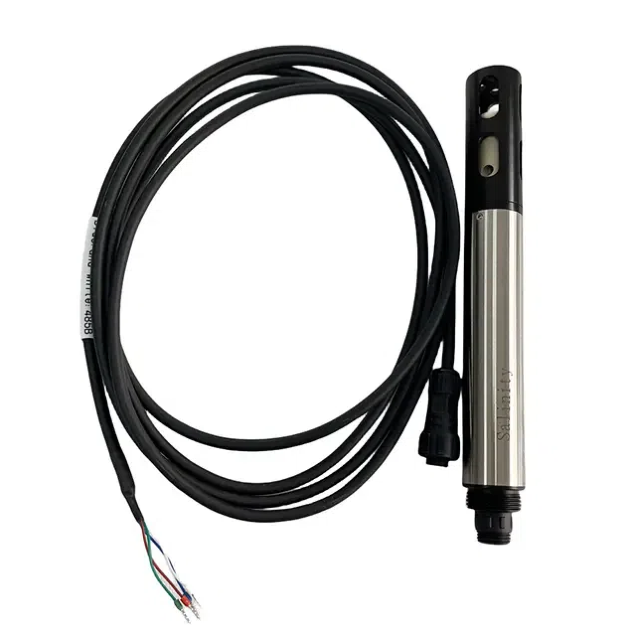
Leadmed Technology incorporates multiple anti-fouling solutions to reduce maintenance and preserve accuracy:
Physical methods: Mechanical wipers, protective guards, and flow-through enclosures prevent biofilm accumulation and reduce interference from debris.
Software solutions: Automatic signal compensation adjusts for minor fouling or environmental drift, maintaining measurement stability between maintenance cycles.
Routine cleaning prevents data degradation:
High-fouling environments: Sensors in wastewater, industrial effluent, or nutrient-rich waters may require weekly or biweekly cleaning to maintain accuracy.
Clean or controlled water systems: Monthly or quarterly cleaning, combined with automated self-check routines, is typically sufficient to ensure consistent performance.
Adhering to recommended cleaning intervals and methods prolongs sensor life, reduces unexpected downtime, and ensures that operational decisions are based on precise data. In addition, combining automated compensation with scheduled cleaning can minimize manual interventions while maintaining high-quality readings.
Regular calibration is essential for maintaining accurate Water Monitoring Sensors:
Check baseline readings for pH, dissolved oxygen, conductivity, and other relevant parameters using standard solutions or reference sensors.
Adjust sensor output according to manufacturer guidance, recording calibration results for traceability.
Confirm that automatic compensation features are functioning and logging corrections appropriately.
Maintenance logs should document all cleaning, calibration, and repairs. Trend analysis of historical data can identify gradual sensor drift, environmental effects, or hardware degradation, allowing preemptive corrective action before data quality is compromised. Leadmed sensors support integrated logging and cloud reporting, making QA tracking more streamlined and efficient. Consistent logging also helps identify recurring issues, optimize maintenance schedules, and improve overall system reliability.
Operators may encounter occasional issues, which can often be resolved quickly:
Noisy readings: Check for loose connections, turbulence, or interference.
Sudden offsets or spikes: Recalibrate the sensor and inspect for fouling or physical damage.
Communication dropouts: Verify cable integrity, network configuration, and data logger functionality.
Environmental anomalies: Confirm that extreme temperatures, high turbidity, or chemical exposure have not affected readings.
Structured troubleshooting minimizes downtime, maintains data reliability, and ensures uninterrupted monitoring operations. Having a clearly defined troubleshooting workflow helps field teams act efficiently and reduces the risk of prolonged data gaps.
To maximize sensor lifespan and data quality, operators should develop a routine schedule combining:
Periodic calibration checks
Cleaning and anti-fouling actions
Firmware updates and automatic compensation verification
Maintenance logging and trend analysis
Leadmed sensors are engineered to support easier maintenance and reduce operational effort:
Intelligent signal processing mitigates measurement noise
Automatic compensation reduces the frequency of manual interventions
Multi-parameter options minimize the number of physical installations required
Durable industrial-grade construction extends operational life, even in harsh environments
By taking advantage of these features, operators can optimize both network coverage and data reliability, achieving cost-effective monitoring solutions without compromising data integrity.
Accurate, reliable, and actionable water quality data begins with proper installation and diligent maintenance of Water Monitoring Sensors. Structured pre-install surveys, careful mounting, anti-fouling strategies, routine cleaning, calibration, and maintenance logging collectively ensure that sensors provide consistent performance over time. Leadmed Technology’s portfolio of intelligent, robust, and easy-to-maintain sensors supports municipal, industrial, and environmental monitoring applications, providing operators with confidence that their water quality data is precise and trustworthy. Leveraging automated features, trend analysis, and routine QA procedures reduces operational downtime, maintains compliance, and optimizes decision-making. Contact us to discover how our Water Monitoring Sensors and sensor maintenance solutions can help you build reliable, scalable, and long-term monitoring networks tailored to your operational needs.
