
Real-time Water Monitoring Sensors transform raw measurements into actionable insights, enabling operators to respond instantly to anomalies, reduce operational incidents, and optimize resource use. Unlike periodic sampling methods, which may leave gaps in data, continuous monitoring ensures that deviations in water quality are detected as soon as they occur. Leadmed Technology’s advanced water monitoring solutions combine precision sensors with IoT connectivity, providing a robust platform for real-time monitoring in municipal water systems, industrial processes, and environmental monitoring programs. By leveraging intelligent telemetry, organizations can improve compliance, enhance efficiency, and safeguard public health. Continuous real-time monitoring also supports operational optimization, reduces emergency interventions, and provides a complete audit trail for regulators or internal quality assurance teams.
Traditional water sampling often involves manual collection and laboratory analysis, which can delay the detection of contamination or operational issues. Real-time Water Monitoring Sensors provide continuous measurements, capturing sudden spikes or drops in key parameters such as pH, dissolved oxygen, turbidity, and residual chlorine. Early detection allows operators to address problems before they escalate, reducing the risk of regulatory violations, equipment damage, or environmental harm. This proactive monitoring approach is essential for facilities that prioritize operational reliability, resource efficiency, and public safety. Moreover, real-time data enables predictive insights, allowing operators to anticipate trends and prevent potential system failures.
Real-time monitoring supports a range of automated interventions, reducing the reliance on manual oversight and improving system responsiveness:
Automated flushing: Activates based on detected turbidity or microbial indicators, maintaining safe water quality in distribution systems.
Pump and valve controls: Adjusts flow rates or redirects water based on chemical, temperature, or flow measurements, enhancing process efficiency.
Operator alerts: Immediate notifications via SMS, email, or monitoring platforms ensure rapid response to threshold breaches.
By combining Water Monitoring Sensors with automated control systems, facilities can optimize resource use, reduce chemical waste, and maintain compliance even in complex, high-volume operations.
Selecting the appropriate connectivity method requires evaluating trade-offs in range, power, data bandwidth, and cost:
LoRaWAN: Offers long-range, low-power communications suitable for distributed networks such as pipelines or remote monitoring stations.
NB-IoT: Provides wide coverage, secure transmission, and low power consumption, ideal for urban and rural monitoring sites.
Cellular (3G/4G/5G): Supports high-bandwidth data transfer for real-time visualization and large-scale sensor networks.
Wired networks: Deliver stable and continuous communication for centralized facilities, though installation may be more complex and costly.
Considering these factors ensures the monitoring network remains reliable, cost-effective, and scalable, while enabling timely data-driven decisions.
IoT water monitoring systems often rely on gateways to aggregate sensor data, preprocess measurements, and transmit them to cloud or local servers. Offline buffering ensures that temporary network disruptions do not result in data loss, providing continuity for regulatory reporting and operational decision-making. Leadmed Technology’s sensors and gateways support flexible communication architectures, enabling robust, fault-tolerant deployments in urban, industrial, or remote environmental sites.
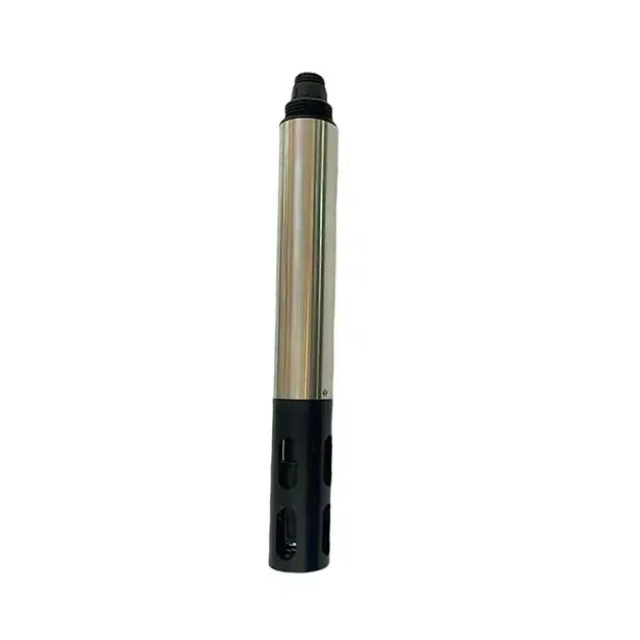
Advanced Water Monitoring Sensors incorporate on-device intelligence to maintain measurement accuracy:
Automatic compensation: Corrects readings for temperature, conductivity, or other environmental variations.
Filtering and spike rejection: Eliminates false readings caused by turbulence, electrical noise, or temporary events.
Sensor self-checks: Continuously monitor sensor performance and calibration status, reducing maintenance demands.
These features enhance reliability, reduce false alarms, and ensure consistent, high-quality data even under challenging conditions. Operators can rely on real-time alerts without constant manual verification.
Edge processing allows data analysis directly on the sensor or gateway, providing immediate alerts and operational adjustments. Cloud analytics aggregates data from multiple sensors, enabling trend analysis, predictive maintenance, and historical reporting. Combining edge and cloud capabilities maximizes operational insight, allowing organizations to respond quickly to events while maintaining strategic long-term visibility across distributed systems.
Modern IoT water monitoring platforms provide intuitive dashboards that allow operators to:
Visualize real-time readings with customizable thresholds.
Track trends over days, weeks, or months to identify gradual changes or recurring anomalies.
Export data for reporting or integration with regulatory systems using formats such as CSV or APIs.
Dashboards enable informed decision-making, operational optimization, and quick regulatory compliance checks. Visual alerts and trend indicators also support preventive actions before issues escalate.
Water Monitoring Sensors can integrate seamlessly with SCADA systems or environmental data lakes, allowing centralized management of distributed water networks. Integration enhances coordinated operational responses, enables predictive analytics, and supports advanced environmental monitoring strategies. By combining multiple data sources, operators can correlate water quality with process conditions, weather events, or upstream changes, creating a comprehensive decision-making framework.
Remote water monitoring requires robust security and reliable operation. Consider features such as:
Data encryption: Protects sensitive measurements during transmission.
Over-the-air firmware updates: Ensures devices remain secure and functional with minimal manual intervention.
Battery and solar power options: Facilitate off-grid deployment and reduce the need for frequent site visits.
These elements are crucial for maintaining uninterrupted, trustworthy monitoring across distributed networks.
To maximize reliability, modern monitoring systems implement redundancy and failover strategies. Dual sensors, backup communication paths, and mirrored data storage ensure that critical water quality data remains available even during hardware failures or network outages. Leadmed Technology’s sensors are designed with high reliability, making them suitable for demanding remote, industrial, and municipal environments.
Implementing a real-time Water Monitoring Sensors system delivers critical benefits for operational efficiency, compliance, and public safety. Continuous monitoring captures anomalies immediately, allowing for automated corrective actions such as flushing, pump control adjustments, or operator notifications. By carefully selecting connectivity methods, deploying intelligent on-device processing, and integrating data with dashboards and SCADA systems, organizations can optimize water quality management while reducing manual oversight. Security, redundancy, and power reliability further ensure uninterrupted, trustworthy operation across all environments. Leadmed Technology provides a full suite of IoT water sensors designed for precise, reliable, and scalable real-time monitoring, supporting municipal, industrial, and environmental applications. Contact us to learn how our sensors can enhance your water monitoring program and enable smarter, more responsive water management.
