Views: 0 Author: Site Editor Publish Time: 2026-10-30 Origin: Site

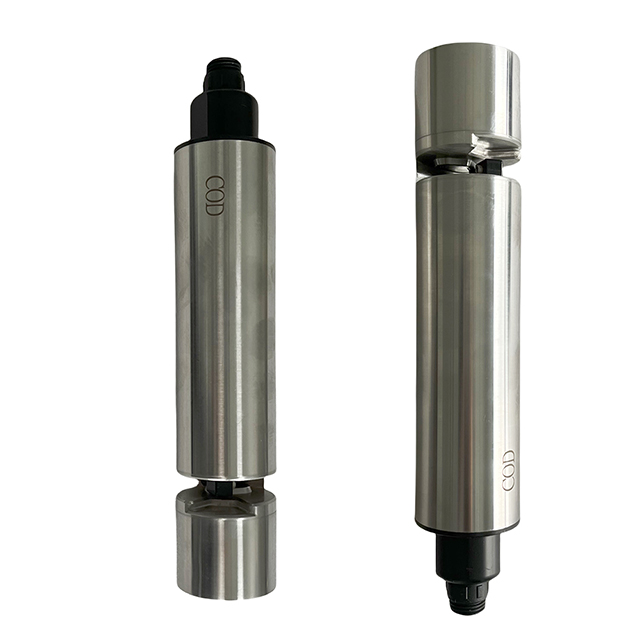
Transitioning from traditional, delayed chemical laboratory COD tests to real-time monitoring is critical for modern process control. Strict environmental compliance demands constant vigilance. However, choosing the wrong optical sensor often leads to false data streams. Poor selections also create massive maintenance overhead. You need reliable tools to avoid these operational pitfalls. What powers this real-time approach? A high-quality UVCOD sensor operates by utilizing UV254nm spectral absorption. This specific wavelength correlates dissolved organic matter precisely to Chemical Oxygen Demand. Operators gain immediate insights without handling hazardous chemical reagents.
Simply dropping a generic probe into water guarantees failure. Selecting an instrument requires balancing optical precision with physical ruggedness. You must evaluate environmental fit and system integration capabilities carefully. We will guide you through this exact evaluation framework. Our insights help engineers make confident, data-backed hardware choices.
Correlation is Site-Specific: UV COD sensors measure UV absorbance; accurate continuous COD monitoring requires establishing a baseline correlation with local lab data.
Turbidity Compensation is Non-Negotiable: Look for dual-beam or multi-wavelength sensors to prevent suspended solids from skewing organic load readings.
Fouling Defense Defines Lifespan: An industrial wastewater sensor will fail quickly without integrated auto-cleaning mechanisms (mechanical wipers or compressed air).
Integration Over Isolation: The best sensor seamlessly feeds real-time data into SCADA or cloud telemetry networks for immediate process optimization.
Operators often struggle to balance strict environmental regulations and efficient plant management. Traditional dichromate COD lab methods demand a two-hour minimum wait time. This delay renders immediate process control nearly impossible. By the time you receive laboratory results, problematic effluent has already passed through your facility. You need immediate feedback to make impactful operational decisions. Implementing continuous COD monitoring eliminates this dangerous blind spot entirely. You receive real-time data streaming directly into your control room. Operators can visualize organic load trends instantly. They can react to sudden spikes before discharge limits are breached.
Preventing financial penalties drives the primary business case for this technological upgrade. Municipalities levy hefty surcharge fines for unexpected organic loads. Regulatory bodies penalize compliance breaches severely. Early event detection prevents these financial disasters effectively. You can divert highly contaminated streams into holding tanks before they trigger violations. Proactive diversion protects biological treatment basins from toxic shock loads. Accurate data protects your operational budget from unpredictable fines.
Real-time organic load data unlocks significant process optimization opportunities. Aeration basins in wastewater treatment plants consume enormous amounts of energy. When you know the exact organic burden instantly, you can modulate blower speeds dynamically. You avoid over-aerating basins during low-load periods. This precision reduces energy consumption drastically while maintaining optimal treatment efficiency. Operators transform passive monitoring into active process control.
Buyers must evaluate instruments systematically before making purchasing decisions. Use this decision-stage checklist to mirror buyer evaluation steps. Match hardware capabilities against your operational realities.
You must match sensor specifications directly to expected organic fluctuations. A facility discharging highly treated effluent might only need a 0-100 mg/L measurement range. In contrast, raw influent streams often demand capacities exceeding 0-5,000 mg/L. Choosing an improperly scaled water COD sensor causes data clipping during peak events. It also diminishes measurement resolution during low-flow periods. Define your historical high and low values before evaluating technical sheets.
Suspended solids interfere heavily with optical measurements. Particles scatter light, simulating artificially high organic loads. Turbidity compensation remains absolutely critical for accurate readings. Look for dual-beam technology to solve this issue. These advanced devices measure absorbance at 254nm for organics. They simultaneously measure a visible wavelength like 530nm or 850nm. The internal processor subtracts the visible wavelength interference. This mathematical correction prevents suspended solids from skewing your vital data.
Older instruments utilize traditional mercury or xenon UV lamps. These bulbs degrade quickly and drift out of optical calibration. Modern instruments leverage advanced UV-C LEDs instead. LEDs deliver superior energy efficiency. They also exhibit significantly reduced optical drift over time. They extend replacement intervals drastically. Operators spend less time swapping bulbs and more time analyzing accurate data streams.
Feature | Traditional UV Lamp | Modern UV-C LED |
|---|---|---|
Warm-up Time | Requires several minutes | Instant illumination |
Energy Efficiency | High power consumption | Low power consumption |
Lifespan | Typically 1 to 2 years | Often exceeds 5 years |
Optical Drift | High, requires frequent calibration | Minimal drift, highly stable |
Aggressive water matrices destroy standard plastics and low-grade metals quickly. You must specify housing materials carefully. Corrosive or highly acidic environments demand titanium bodies. Highly alkaline streams might require specialized POM or SS316L stainless steel. Evaluate your chemical profile thoroughly before finalizing hardware choices.
Different applications require different measurement speeds. Inline process control demands rapid feedback to adjust chemical dosing instantly. Acceptable T90 response thresholds for process control usually sit below 30 seconds. Compliance logging applications tolerate slower response times easily. A two-minute measurement cycle suffices for purely reporting purposes. Outline your speed requirements clearly.
Applying a generic probe to diverse environments guarantees failure. You must tailor the instrument profile to your specific water matrix.
Surface water applications present unique environmental challenges. Your primary focus must remain on low-range detection accuracy.
Low-Range Precision: Rivers and lakes typically exhibit very low baseline organic concentrations. The equipment must detect minute fluctuations reliably.
Power Autonomy: Remote deployment locations often lack reliable grid power. You need instruments offering robust battery power capabilities. Low-draw UV-C LEDs become essential here.
Biological Resilience: Seasonal algae blooms introduce massive biological interference. The hardware must demonstrate strong resilience against unpredictable biological fouling spikes.
Factory effluents operate under entirely different extremes. An industrial wastewater sensor faces punishing conditions daily.
High-Range Capacities: You must prioritize high-range measurement capacities to handle concentrated waste streams. Sensors must not saturate during process upsets.
Chemical Resistance: Resistance to harsh chemicals is mandatory. Avoid materials susceptible to solvent degradation.
Installation Geometry: You must decide between bypass configurations and direct submersion. Flow cells protect delicate optics from direct basin turbulence. Direct submersion works well for stable holding tanks.
Spike Handling: The system must handle sudden, toxic organic spikes without freezing. It should recover baseline readings quickly after the event passes.
Optical sensors perform brilliantly under ideal conditions. Real-world applications, however, introduce severe operational friction. Understanding these implementation risks builds a realistic deployment strategy.
Let us address a guaranteed reality: optical lenses placed in water will foul. Algae, grease, and bacterial films attach to sapphire windows rapidly. A blinded instrument reports useless data. You must evaluate automated cleaning options rigorously. Mechanical wipers featuring nano-coated blades provide excellent physical scrubbing. They physically sweep debris away before every reading. High-pressure air or water blasts offer touchless cleaning for abrasive environments. Choose the mechanism matching your specific suspended solid profile. Without these defenses, manual cleaning becomes a daily burden.
Transparency matters when discussing optical proxies. A UV COD sensor does not measure COD directly. It provides a proxy measurement based on light absorbance. Operators must understand this critical onboarding requirement clearly. You must take parallel grab samples during the initial installation phase. Your local laboratory analyzes these samples using approved chemical methods. You then upload this data into the controller. This builds a custom UV-to-COD conversion algorithm. This mathematical correlation aligns the proxy measurement to your unique water matrix accurately.
Automated cleaning extends service intervals significantly. However, routine physical maintenance remains necessary. Provide a realistic expectation of operational expenditures (OPEX) to your team. Mechanical wiper blades degrade continuously. Expect wiper replacement frequency to hover around six to twelve months. Zero-point calibrations demand ultra-pure, organic-free water to reset baseline optics accurately. We recommend performing these checks quarterly. Routine sensor inspection schedules prevent catastrophic failures. Adhering to these schedules ensures long-term data integrity.
Brilliant hardware fails if it cannot communicate effectively. Your data architecture dictates the ultimate value of the measurement.
Installation geometry impacts data quality heavily. You must weigh the pros and cons of different physical setups carefully. Inline pipe-mounted systems offer excellent process representation. However, they complicate maintenance access significantly. Submersion styles drop straight into tanks or basins. They simplify installation but expose equipment to harsh physical turbulence. Bypass extractive flow cells pull water away from the main process. This protects the equipment and simplifies calibration routines. Consider your maintenance team's accessibility requirements before choosing.
Modality | Description | Pros | Cons |
|---|---|---|---|
Inline | Mounted directly into the process pipe | Zero lag time, true process conditions | Hard to remove for cleaning, requires process shutdown |
Submersion | Dropped into a basin or tank via chain/pole | Easy to deploy, low installation complexity | Exposed to debris collisions, vulnerable to cable damage |
Bypass | Extractive flow cell branching off main line | Easy maintenance, protects optics from turbulence | Requires sample pumps, slight lag in measurement time |
Industrial environments utilize diverse communication networks globally. Ensure your chosen hardware supports modern industrial communication standards. Analog 4-20mA outputs handle basic, single-parameter signaling efficiently. Advanced digital networks require robust protocols like RS485 or Modbus RTU. Remote environmental deployments frequently utilize SDI-12 for low-power cellular telemetry. Matching the output protocol to your existing SCADA architecture prevents frustrating integration delays.
Collecting numbers serves no purpose without a tangible reaction. Real-time data output should trigger automated plant responses dynamically. High organic load readings must trigger automated alarms within your PLC system. The control system can adjust dosing pumps automatically based on this feed. This closed-loop control optimizes chemical consumption instantly. It guarantees consistent effluent quality without human intervention.
Selecting the right UV COD continuous monitor requires balancing optical accuracy with physical durability. You must prioritize multi-wavelength compensation to eliminate turbidity interference effectively. Simultaneously, robust auto-cleaning mechanisms protect your investment from rapid biological fouling. Map out your expected organic load range meticulously before shopping. Review your water's historical turbidity levels. Calculate necessary cable lengths and confirm integration protocols early in the process. We advise buyers to consult with a qualified application engineer. Request a pilot trial in your specific effluent stream. Download technical specification sheets to verify parameter limits against your unique compliance requirements.
A: Yes, provided the water matrix remains stable. The UV254 absorbance can be mathematically correlated to BOD (Biochemical Oxygen Demand) and TOC (Total Organic Carbon) via site-specific calibration. Operators must take parallel grab samples for these specific parameters and build custom conversion algorithms inside the controller.
A: Auto-wipers extend maintenance intervals significantly, but manual checks remain vital. Zero-point calibration using ultra-pure water is typically recommended every 1–3 months. Furthermore, operators should perform matrix correlation checks bi-annually. This schedule depends heavily on local regulatory requirements and the aggressive nature of the specific effluent stream.
A: UV absorbance itself is relatively temperature-stable. However, extreme fluctuations can cause minor optical or electronic variances within the circuit board. Most high-quality sensors include built-in thermistors to compensate for these variances automatically. This internal compensation ensures the final output remains accurate regardless of seasonal temperature swings.