
Views: 0 Author: Site Editor Publish Time: 2026-10-12 Origin: Site
Evaluating quotes for environmental monitoring equipment often feels like comparing apples to oranges. Quotations usually obscure proprietary accessories and long-term maintenance requirements behind a single base price. This makes the procurement process incredibly challenging for project managers, engineers, and field teams alike. Selecting a solution based purely on the lowest upfront unit price frequently leads to budget overruns in year two. Field teams suddenly face unexpected expenses for labor, specialized calibration, and rapid consumable depletion. You need a better way to measure financial realities over the entire deployment lifespan. Real-world conditions destroy theoretical budgets if you fail to account for routine site visits. This article provides a skeptical, evidence-based framework for evaluating quotes involving commercial-grade monitors. You will learn how to identify hidden fees and operational drains before signing a purchase order. We will guide you through standardizing your financial comparisons for smarter decision-making. By applying these strict procurement lenses, your team can avoid costly long-term mistakes.
Upfront price is only 30-40% of the true cost: Labor for calibration and cleaning dominates the operational budget over a 3-year deployment.
Not all "base models" are equal: Quotations often omit necessary cables, data loggers, or telemetry modules required for actual deployment.
Wiper systems and anti-fouling dictate ROI: Paying a premium for effective bio-fouling prevention reduces site-visit frequency, drastically lowering long-term expenses.
Standardized evaluation protects budgets: Using a strict parallel comparison model prevents vendors from hiding long-term licensing or proprietary software fees.
To fully understand a multiparameter water quality sensor cost, you must look beyond the initial invoice. Break down the standard 3-to-5-year lifecycle expenses into three distinct buckets. These include Capital Expenditure (CapEx), Operational Expenditure (OpEx), and Integration Costs. Organizing your budget this way reveals the actual financial commitment of your deployment.
This bucket contains the tangible hardware you purchase on day one. It includes the base unit, data logging interfaces, and specific sensor probes like pH, dissolved oxygen (DO), turbidity, and conductivity. You must also account for protective guards, mounting hardware, and ruggedized cables. Vendors clearly list these items on the initial bid. However, they sometimes present a stripped-down version to appear competitive. You must ensure the quoted CapEx covers a fully functional, deployable system rather than just a bare instrument.
These ongoing expenses often drain budgets silently. You must calculate the cost of chemical reagents, calibration solutions, and replacement sensor caps. Optical DO caps, for example, require periodic replacement to maintain luminescence accuracy. Crucially, factor in technician labor hours for routine site visits. Labor remains the most expensive operational variable in environmental monitoring. Traveling to remote sites, pulling the instrument from the water, cleaning it, and running calibration cycles burns through thousands of dollars annually.
Many buyers make the critical mistake of ignoring "drift rate" specifications during procurement. Sensors exhibiting high drift rates lose accuracy quickly and require bi-weekly calibrations. This frequency effectively doubles your labor costs compared to more stable alternatives. We recommend requesting historical drift data from vendors. Always verify baseline stability before committing to a platform. Choosing a sensor with minimal drift allows you to extend maintenance intervals from two weeks to two months, saving immense operational capital.
When reviewing a water quality sonde quote, apply these five analytical lenses. They reveal discrepancies between competing bids and expose missing necessities.
Included vs. Required Accessories: Does the quote actually include the specific cable length required for your deployment depth? Many vendors price cables separately to artificially lower the base price. A "cheap" base unit becomes surprisingly expensive when you add a 50-meter ruggedized polyurethane cable. Scrutinize the quote for missing deployment tubes, bail kits, or specialized communication adapters.
Sensor Technology Lifespans: Carefully examine the dissolved oxygen (DO) sensors proposed in the bid. Are they optical or galvanic? Optical DO features a higher upfront cost. However, it delivers significantly lower maintenance intervals because it lacks fragile membranes. The long-term savings heavily outweigh the initial premium. Always project sensor lifespans against your intended project duration.
Anti-Fouling Capabilities: Bio-fouling remains the leading cause of data failure in extended aquatic deployments. Does the system include a central motorized wiper? Or does it rely on individual probe wipers with copper guards? Strong anti-fouling measures save countless maintenance hours. If a vendor offers a cheaper sonde without automated cleaning, your labor costs will skyrocket as algae rapidly blinds the optical windows.
Telemetry and IoT Readiness: Evaluate how the device communicates with your existing infrastructure. Is the unit native to standard protocols like RS485/Modbus, SDI-12, or even modern MQTT? If it requires a proprietary gateway or specialized junction box, your integration expenses will spike. Open standards ensure smoother data logging and prevent vendor lock-in.
Warranty and RMA Realities: Harsh aquatic environments guarantee that hardware will eventually fail. What is the turnaround time for recalibration or repair? Investigate whether the vendor offers loaner units during repair windows. Speedy replacements prevent critical data gaps during regulatory monitoring. A cheap sensor with a three-month repair backlog is a massive liability.
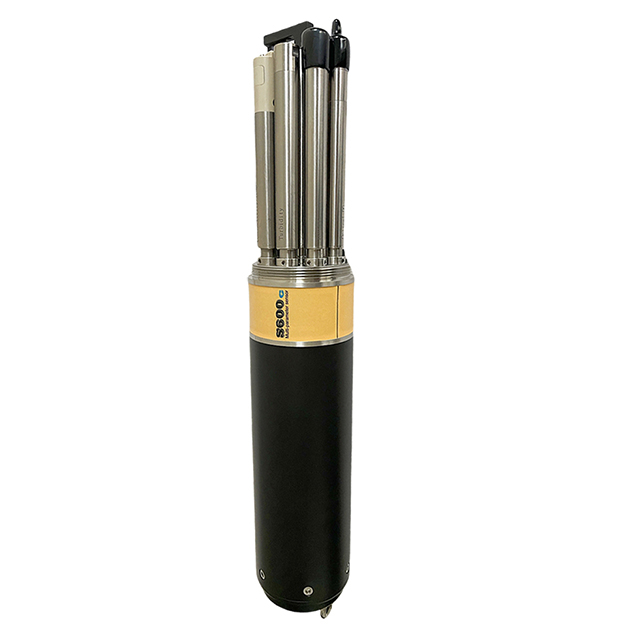
When evaluating the S600-PRO sensor against competitor bids, you must dig deeply into the fine print. Hidden fees often mask themselves as standard operating procedures. Use these checkpoints to protect your budget.
Proprietary Software Licenses: Scrutinize the data visualization and logging software. Does it require an ongoing annual subscription? Or does the vendor provide a perpetual, included license? Subscription models quietly inflate your annual budget. Open-source or permanently licensed software drastically improves long-term affordability.
Consumables Pricing Matrix: Never assume consumable prices are standard across brands. Request a separate line-item quote for a typical year of consumables. This should detail pH buffers, conductivity calibration standards, and replacement wiper brushes. High markup on proprietary calibration fluids can ruin an otherwise economical deployment.
Replacement Probe Architecture: Evaluate how probes connect to the main sonde body. Are they user-replaceable in the field via a plug-and-play interface? If you must ship the entire unit back to the manufacturer for a simple pH probe swap, you face severe downtime. Shipping costs and factory labor will quickly accumulate. Wet-mateable, field-replaceable sensors represent the gold standard for efficiency.
Power Consumption Limits: Remote IoT deployments rely heavily on solar and battery power. High power draw requires larger solar panels, heavier batteries, and stronger mounting poles. This escalates the overall station build cost significantly. Choose low-power devices with smart sleep modes to minimize your surrounding infrastructure requirements.
To build a compelling business case, you must translate technical specifications into direct financial outcomes. We recommend constructing a parallel comparison matrix to visualize these differences clearly.
Financial Impact of Sensor Specifications
Specification Feature | Standard Option | Premium Option | Financial Outcome |
|---|---|---|---|
Accuracy vs. Needs | ±0.1 (Industrial Grade) | ±0.01 (Laboratory Grade) | Overpaying for unnecessary precision wastes capital. Match specs to your permit. |
Housing Material | Delrin / PVC | Titanium | Titanium increases upfront cost but prevents catastrophic flooding in deep deployments. |
Bio-fouling Control | Passive Copper Tape | Motorized Central Wiper | Wipers reduce manual cleaning trips by up to 80%, slashing operational labor. |
Integration Protocol | Proprietary Output | Open SDI-12 / Modbus | Standard protocols eliminate the need for costly custom programming and gateways. |
Avoid paying for laboratory-grade precision (±0.01) if you do not strictly need it. If your environmental compliance permit only requires industrial-grade reporting (±0.1), match the specification to the mandate. Overpaying for unnecessary precision wastes capital that you could spend on better telemetry or spare parts. Define your data requirements before reviewing accuracy charts.
Compare housing materials closely. Common options include Titanium versus Delrin or PVC. Titanium increases the initial expense upfront. However, it prevents micro-cracking and flooding in high-salinity or deep-water deployments. A flooded housing destroys the internal electronics, resulting in a total loss. Investing in robust materials acts as an insurance policy for your data collection.
Always frame your financial evaluation around "cost per valid data point" rather than simply "cost per sensor." Cheaper sensors often produce noisy, unusable data due to poor interference shielding. If you cannot trust the readings, or if you must discard half your dataset, the equipment carries a 100% loss on investment. Reliable data is the true product you are purchasing.
Before you finalize your procurement and issue a Purchase Order (PO), validate these critical implementation factors. Overlooking these steps often causes severe deployment delays.
Check the factory delivery settings. Do units arrive factory-calibrated with NIST-traceable certificates? Or does your field team need to perform an immediate baseline calibration upon unboxing? Factory-calibrated units save an entire day of preliminary labor. They allow your team to deploy the instruments immediately, accelerating your project timeline.
Assess the risk of integrating SDI-12 outputs into existing third-party data loggers. Look for guaranteed compatibility. Vendors offering pre-written scripts, wiring diagrams, or proven integration guides significantly reduce deployment delays. Ask the manufacturer for a documented example of their device communicating with your specific brand of telemetry node.
Does the quote include virtual or on-site commissioning support? Budget for the learning curve if you are transitioning your fleet from a different brand ecosystem. Field technicians need time to master new calibration interfaces and software dashboards. Proper training minimizes human error during the crucial early stages of a monitoring campaign.
Rule out vendors who refuse to provide comprehensive 3-year consumable cost projections. Prioritize manufacturers who transparently document the MTBF (Mean Time Between Failures) for individual probes. Extreme transparency indicates a reliable manufacturing process. If a sales representative hesitates to estimate annual maintenance costs, consider it a major red flag.
Procuring environmental monitors requires a major perspective shift. You must move away from simply comparing "price tags" and focus entirely on comparing "deployment viability." The cheapest box often becomes the most expensive burden once it hits the water. Labor, drift, and part replacements ultimately dictate your success.
Evaluating options against alternatives requires normalizing the quotes. You must build financial models that include 12 months of maintenance, replacement caps, and necessary integration hardware. This ensures a fair, apples-to-apples comparison across different brands. Never accept an initial quote at face value.
Before making a final decision, advise your procurement team to request a "Year-1 and Year-3 Operations Estimate" from all shortlisted vendors. Demand this document before issuing any purchase orders to safeguard your operational budget and guarantee project success.
A: The main housing typically lasts between 3 to 5 years under normal deployment conditions. However, individual consumable probes require more frequent attention. Components like pH electrodes or optical dissolved oxygen caps usually need replacing every 12 to 18 months to maintain accurate readings.
A: Optical DO sensors lack fragile membranes and do not consume oxygen during measurement. They operate without flow dependence or stirring mechanisms. This drastically reduces maintenance frequency and calibration drift. The upfront premium pays for itself through massive reductions in field labor and part replacements.
A: While using standard third-party buffers seems cheaper, it introduces significant risks. Many manufacturers void warranties if you use non-proprietary solutions. Furthermore, some systems require specific buffer values for automated calibration routines. Always verify technical compatibility before switching away from vendor-supplied calibration standards.
A: Unmitigated bio-fouling quickly degrades sensor accuracy, rendering data useless. Without automated wipers or copper anti-fouling guards, field teams must perform weekly manual cleaning trips. This constant travel and labor represent the highest hidden operational expense in continuous water monitoring programs.


