Views: 0 Author: Site Editor Publish Time: 2026-10-21 Origin: Site

Field data drives critical regulatory decisions every single day. It shapes significant operational strategies across multiple industries. A single inaccurate reading can quickly trigger severe compliance violations. Inaccurate data can completely corrupt long-term environmental baselines. Environmental professionals face a difficult daily reality out in nature. Controlled laboratory specifications rarely match unpredictable outdoor conditions. You need a rigorous evaluation framework to bridge this frustrating gap. You cannot afford guesswork in environmental monitoring programs. Precision protects your organizational reputation and natural ecosystems.
This article empowers procurement and field operations teams. We provide evidence-based strategies to evaluate professional equipment correctly. You will learn how to identify sensors built for actual field survival. We explore configuration approaches and essential field maintenance realities. You will finally secure reliable data in harsh environments. We focus purely on verifiable data accuracy and operational deployment durability.
Field readiness requires evaluating beyond basic parameter lists to include calibration retention, anti-fouling capabilities, and environmental tolerances.
Data integrity hinges on built-in diagnostic tools and seamless export capabilities.
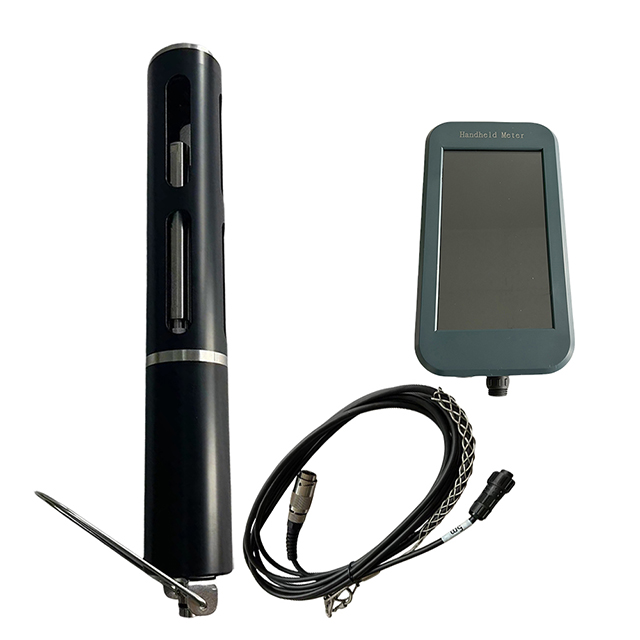
Smart shortlisting requires matching specific environmental challenges to purpose-built configurations, such as the S600-M4 water quality probe.
Teams often struggle when choosing reliable environmental testing gear. Successful field water quality monitoring requires understanding your specific operational risks. Unreliable data causes expensive and exhausting re-sampling trips. Technicians drive hours to remote sites only to discover faulty sensor data. It also exposes organizations to severe regulatory fines. These operational setbacks far outweigh initial equipment investments. Buying cheap sensors usually results in cascading hardware failures. Your technicians lose valuable hours troubleshooting equipment on site.
You must define clear success metrics before purchasing anything. A successful deployment looks very specific in practice. We recommend targeting specific performance baselines for every monitoring project.
99% Data Availability: Your equipment must capture nearly every scheduled reading successfully.
Minimal Calibration Drift: Drift should remain under 5 percent over a 30-day deployment period.
Zero On-Site Troubleshooting: Technicians should collect data and leave. They should not dismantle probes in the mud.
Best Practice: Always standardize equipment across your entire team. Standardization reduces training overhead significantly across your organization. It ensures strict data uniformity across different testing sites. Different technicians will produce identical data quality using identical interfaces. This uniformity strengthens your environmental compliance reporting drastically. It also simplifies your spare parts inventory logistics. Your team becomes highly proficient at operating one standardized platform.
Common Mistake: Organizations frequently let individual researchers buy disparate equipment brands. This fragments the data ecosystem and complicates maintenance schedules.
Selecting a portable multiparameter water quality sensor involves navigating various configurations. You must evaluate fixed versus interchangeable sensor ports carefully. Fixed-parameter legacy units offer some initial simplicity. However, they lack long-term operational flexibility. Modular configurations allow you to swap sensors easily in the field. You can adapt the probe for entirely different testing campaigns. If a single sensor fails, you only replace one small part. This modularity keeps your core equipment functioning longer.
Dissolved Oxygen (DO) represents a critical testing parameter. You must choose between optical and electrochemical DO sensors. Electrochemical sensors use older galvanic or polarographic technology. They use a permeable membrane and an internal electrolyte solution. Oxygen crosses the membrane to generate a small electrical current. These sensors require continuous water stirring because they consume oxygen. They also demand frequent delicate membrane replacements.
Optical DO sensors use modern luminescence technology instead. Blue light excites a specific internal dye. Dissolved oxygen quenches this luminescence predictably. Optical sensors require zero stirring. They have no delicate membranes to tear during deployment. They typically offer much lower maintenance requirements. They also provide significantly higher stability in demanding field conditions. Regulatory bodies now widely accept optical sensors for compliance reporting.
Table 1: Optical vs. Electrochemical DO Sensors
Feature | Optical DO Sensor | Electrochemical DO Sensor |
|---|---|---|
Maintenance Needs | Low (Annual cap replacement) | High (Frequent membrane changes) |
Flow Dependency | None (No stirring required) | High (Requires continuous water flow) |
Calibration Frequency | Infrequent (Highly stable over months) | Frequent (Prone to rapid drift) |
Field Durability | Excellent in harsh conditions | Moderate (Membranes tear easily) |
Buyers must balance parameter breadth against testing depth. Broad testing covers pH, ORP, Conductivity, DO, Turbidity, and Temperature. Some projects require testing all these parameters simultaneously for general baseline studies. However, specific compliance standards require extreme accuracy for just one or two parameters. EPA or USGS methodologies mandate rigorous precision levels. Do not sacrifice essential accuracy just to measure more parameters. Choose sensors built specifically for your required regulatory standards.
You must evaluate your portable water quality meter against harsh field realities. Durability dictates whether your equipment survives daily physical abuse. Beautiful laboratory screens often fail completely during winter fieldwork.
Durability and Ingress Protection: You must verify true IP67 or IP68 ratings. The probe itself usually requires an IP68 rating. It must survive continuous underwater submersion for months. The handheld meter needs a solid IP67 rating. It must withstand heavy rain and accidental drops into puddles. Assess connector ruggedness carefully. Marine-grade stainless steel or titanium connectors outperform plastic ones easily. Plastic connectors become brittle and break during cold weather deployments.
Ergonomics and Field Usability: Technicians use these meters in terrible conditions. Evaluate screen readability in direct, glaring sunlight. A washed-out screen makes data collection impossible. Assess the software user interface thoroughly. Can field technicians navigate calibration menus while wearing thick neoprene gloves? The interface must remain intuitive during adverse weather. Complicated nested menus cause calibration errors in the field.
Battery Life and Power Management: Power limits your operational window entirely. Establish baseline requirements for continuous monitoring hours. Long-term deployments require massive internal battery reserves or external power integration. Spot-checking requires lighter batteries but consistent, reliable longevity over weeks. Always check how the device behaves when power drops critically low. It should safely save data before shutting down automatically.
Data Handling and Compliance Integrity: Verifiable data requires strict digital protocols. Look for automated Good Laboratory Practice (GLP) data logging. Ensure the device includes automatic GPS metadata tagging for every sample. It must offer tamper-proof export formats like CSV or locked PDF files. These features guarantee absolute chain-of-custody credibility. Environmental auditors look specifically for these exact data integrity mechanisms.
Common Mistake: Relying purely on smartphone apps connected via Bluetooth. Phones often overheat in direct sunlight or die quickly in freezing temperatures. Dedicated handheld meters offer far superior reliability.
Field deployments expose sensors to severe implementation risks. Calibration drift represents an unavoidable physical reality. All sensors drift over time due to environmental exposure. Buyers must evaluate vendor calibration guidelines carefully. Compare their stated frequency against realistic field conditions. High-sediment environments accelerate sensor drift significantly. Heavy bio-fouling environments also corrupt readings very quickly. You cannot rely purely on laboratory-based calibration intervals.
Biological growth skews data during extended underwater deployments. Algae and barnacles cover sensor lenses rapidly in warm water. We must emphasize the absolute necessity of built-in wiper mechanisms. Wipers protect turbidity and optical sensors actively. They physically sweep away debris before each measurement cycle. Without anti-fouling mechanisms, long-term deployments fail consistently. Your data becomes entirely useless after just a few days in biologically active water.
You must also understand consumable maintenance limitations. Reveal the hidden maintenance burdens often ignored during early procurement stages. Encourage buyers to calculate annual material replacement requirements. pH reference junctions degrade and require regular replacing. Calibration standard solutions expire and need constant restocking. Wiper brushes wear out and demand periodic swaps. High maintenance demands cripple your field operations quickly.
Best Practice: You must assess how easily technicians can perform these swaps on site. Complex maintenance procedures frustrate teams and ruin sampling schedules. Prioritize equipment engineered for rapid, tool-free field maintenance. If a technician needs tiny screwdrivers to change a wiper brush in a freezing river, the design has failed them.
Smart shortlisting requires a structured, logical approach. You must filter out inappropriate equipment early in the buying cycle. Thousands of options exist, but very few match your exact needs.
Step 1: Baseline Environment Matching: Filter options based entirely on your target water type. Freshwater rivers require different sensors than harsh coastal brackish water. Wastewater testing demands extreme chemical resistance from the probe body. Groundwater sampling requires specific narrow form factors for deep wells. Match your specific environment to the probe materials perfectly.
Step 2: Vendor Support and Warranty Review: Assess the manufacturer support infrastructure deeply. Check their historical turnaround times for complex sensor repairs. Verify the immediate availability of consumable replacement parts. A great probe becomes useless if repairs take three months. You need guaranteed support to maintain your strict monitoring schedules.
Step 3: Applied Example: Consider the S600-M4 water quality probe as a practical baseline for evaluation. This specific device addresses major field friction points effectively. It offers a very rapid specific response time for spot sampling. It features strong external system integration capabilities for long-term data logging. The modular sensor replacement design simplifies field repairs immensely. We assume this specific probe excels in rapid spot sampling routes. It also handles long-term unattended logging exceptionally well. The multiparameter water quality probe handles diverse, harsh environments easily.
You must take decisive action after creating your shortlist. We strongly recommend initiating a real pilot test immediately. Request a field-condition demo from the manufacturer directly. Never rely solely on glossy marketing specification sheets. Test the equipment in your actual local waterways. Let your field technicians handle the gear firsthand in the rain. Their direct feedback will confirm if the equipment performs adequately. They will quickly identify clumsy interfaces or fragile connectors.
Selecting the right monitoring equipment shapes your entire environmental program. The best portable multiparameter sensor minimizes technician friction reliably. It simultaneously maximizes verifiable data accuracy under extreme physical pressure. Field teams need rugged, intuitive tools to succeed consistently. Poor equipment compromises data integrity and destroys team morale.
Take these actionable next steps to improve your procurement process:
Audit your current maintenance logs immediately to identify major equipment pain points.
Standardize your fleet using modular probes to simplify training and spare parts inventory.
Prioritize optical DO sensors and automated wipers to eliminate constant field maintenance.
Demand a real-world pilot test before signing any procurement contracts.
Focus purely on data reliability and deployment durability. This approach ensures your environmental baselines remain unquestionable. It protects your organization from compliance risks effectively.
A: Calibration frequency depends heavily on environmental harshness and sensor type. High-fouling environments might require weekly calibration checks. Cleaner environments often allow monthly intervals safely. Always follow a baseline best-practice interval of checking calibration before every major deployment. Establish a routine based on historical drift data from your specific testing sites.
A: Yes, optical DO sensors can replace electrochemical sensors in almost all applications. Regulatory bodies like the EPA now widely accept optical luminescence methods for compliance reporting. Optical sensors offer massive practical maintenance benefits. They eliminate delicate membranes and require no stirring, providing unmatched stability during continuous field monitoring.
A: A high-quality probe body typically lasts five to ten years in harsh environments. However, individual consumable sensor caps and electrodes degrade much faster. pH electrodes may need replacing every 12 to 18 months. Optical DO caps usually last one to two years. Regular maintenance extends the overall lifespan significantly.