
Views: 0 Author: Site Editor Publish Time: 2026-04-14 Origin: Site
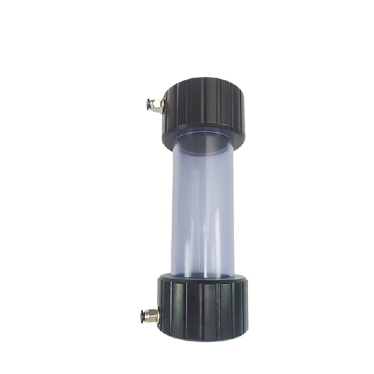
When customers ask us, “How does a flow cell work?”, they usually want to know more than the definition of a component. They want to understand how fluid moves inside it, what happens during detection, and why such a small part can have such a large effect on performance. In simple terms, a flow cell works by guiding liquid or gas through a controlled chamber where the sample can interact with light, sensors, electrodes, reagents, or other active surfaces.
From our perspective, the core value of a flow cell is control. It does not just carry a sample from one point to another. It helps define how the sample enters, how evenly it moves, how long it stays in the active zone, and how reliably the system can generate a result. That is why flow cells are widely used in laboratory instruments, diagnostic systems, chromatography platforms, and industrial monitoring equipment.
A flow cell is a chamber or channel built into a fluid-handling system. Its job is to let a sample pass through a defined path while the system performs a measurement, reaction, or observation.
In many systems, the flow cell connects tubing, pumps, valves, and detectors into one working path. The sample enters through an inlet, moves through the internal chamber, and leaves through an outlet. During this short path, it meets the part of the system that performs the important task, such as a light beam, an electrode surface, or a sensing interface.
Although the concept sounds simple, the flow cell is more than a holder for fluid. Its internal structure directly affects signal stability, response speed, and sample consistency. A good design supports smooth flow and repeatable results, while a weak design can introduce noise, bubbles, or dead volume.
At the most basic level, a flow cell works through a sequence of controlled fluid movement and interaction.
First, the sample enters the flow cell from a pump, syringe, pressure source, or process line. The inlet must guide the fluid in smoothly. If the entry is poor, bubbles may form or the flow may become unstable before the sample even reaches the active area.
Once inside, the fluid travels through the internal channel. This channel is one of the most important parts of the design because it determines speed, volume, contact area, and residence time. A stable path helps create stable measurement conditions.
As the sample moves through the chamber, it interacts with the system. In optical devices, light passes through the sample. In electrochemical systems, the sample flows past electrodes. In diagnostic devices, it may contact reagents, membranes, or sensor surfaces. This is the step where useful information is generated.
After the interaction is complete, the sample leaves through the outlet. It may be sent to waste, collected, recirculated, or passed to another stage. A good outlet design helps keep pressure stable and prevents old sample from remaining trapped inside.
To understand how a flow cell works, it is important to understand that flow behavior itself affects performance.
When fluid moves evenly across the active zone, the system is more likely to give repeatable results. In many analytical systems, smooth laminar flow is preferred because it reduces signal fluctuation and makes the measurement easier to control.
If the chamber design is poor, dead zones, turbulence, or trapped bubbles may appear. These problems can weaken optical readings, disturb electrochemical signals, and increase carryover between samples. In other words, the flow cell works well only when the internal fluid behavior matches the application.
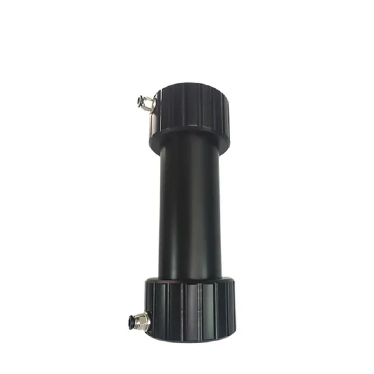
The basic principle is similar across industries, but the exact function changes with the system.
In optical applications, the flow cell works by moving the sample through a transparent path where light can pass through or interact with it.
The detector may measure absorbance, fluorescence, transmittance, or scattering. For this reason, optical clarity and path length are important. If the windows are poor or bubbles block the light path, the signal can become unstable.
In these systems, internal volume and channel shape affect how quickly the system responds when the sample changes. That is why the optical flow cell is closely tied to detection quality.
In electrochemical systems, the flow cell works by guiding the sample across one or more electrodes.
As the sample touches the sensing surface, the system measures current, voltage, conductivity, impedance, or other electrochemical responses. The chamber must support steady contact between the fluid and the electrode zone.
This design is especially useful for real-time analysis. Instead of stopping a process and taking separate samples, the fluid can be measured during operation. That improves efficiency and supports better process control.
In chromatography, the flow cell is often part of the detector after separation has already taken place.
As separated compounds leave the column, they pass through the detector flow cell for measurement. Here, low dead volume is critical. If the chamber is too large or poorly shaped, peaks may broaden and analytical accuracy may drop.
For this reason, the flow cell in chromatography is not just a connector. It is an active part of the detection pathway and can directly affect final data quality.
In diagnostics and life science devices, the flow cell works by handling biological samples in a small, clean, and repeatable environment.
The sample may be blood, serum, buffer, cell suspension, or reagent mixture. The chamber helps manage contact with optical paths, sensors, or reaction areas under controlled conditions.
In these applications, materials, sealing, and contamination control are especially important. Some flow cells are disposable to reduce contamination risk, while others are reusable in controlled systems.
Different designs vary, but several basic elements appear in many flow cells.
Flow Cell Element | Main Function | Why It Matters |
Inlet | Guides fluid into the chamber | Helps stabilize flow and reduce bubbles |
Internal channel | Controls sample movement | Affects contact area, volume, and response time |
Active zone | Where detection or reaction happens | Produces the useful signal |
Window or sensor interface | Allows light passage or sensor contact | Influences accuracy and reliability |
Outlet | Removes used sample | Supports smooth discharge and pressure control |
Seals and housing | Keep the chamber enclosed | Prevent leaks and protect system stability |
A flow cell works best when its structure matches the application.
Channel shape affects how evenly the fluid moves. A well-designed passage supports stable flow, while sharp corners or oversized spaces may trap fluid and create dead volume.
Smaller internal volume usually means faster response and less carryover. Larger volume may increase contact time, but it can also slow sample replacement. The right balance depends on system needs.
The material must match the sample and working conditions. Optical systems may need glass or quartz, while chemically demanding applications may require PEEK, PTFE, stainless steel, or specialized polymers. Sealing is equally important because leaks or air entry can quickly affect performance.
Even a well-designed instrument can struggle if the flow cell is not working properly.
Bubbles are one of the most common issues. They can block optical paths, reduce electrode contact, and make signals unstable.
If old sample remains in the chamber, it may affect the next reading. Over time, particles, salts, proteins, or residues may also build up on internal surfaces and reduce sensitivity.
These problems show that a flow cell does not work by structure alone. It works by maintaining stable fluid conditions again and again during actual use.
We often find that standard flow cell designs are useful at the beginning, but many real systems need something more specific. One project may require very low internal volume, while another may need higher pressure resistance, a special optical window, or a custom sensor interface.
That is why flow cell development is often more than a simple machining task. It involves fluid behavior, materials, sealing, integration, cleaning, and long-term reliability. A suitable design should support the full system rather than limit it.
A flow cell works by guiding liquid or gas through a defined chamber where the sample can interact with light, electrodes, sensors, or reaction surfaces under controlled conditions. Its effectiveness depends on stable flow, suitable geometry, correct materials, and reliable sealing. Although it is often small, it can strongly influence measurement quality and overall system performance.
From our point of view, understanding how a flow cell works is the first step toward choosing the right structure for a real application. A well-designed flow cell can improve accuracy, support automation, and reduce long-term operating problems. For readers who want to explore flow cell solutions in more detail, we recommend learning more from Beijing Leadmed Technology Co., Ltd. and contacting our team when project needs become more specific.
Q: How does a flow cell work in an optical system?
A: In an optical system, a flow cell works by moving the sample through a transparent chamber where light passes through or interacts with it. The detector then measures changes such as absorbance, fluorescence, or transmittance.
Q: Why is channel geometry important in a flow cell?
A: Channel geometry affects how fluid moves through the chamber. A good design supports stable flow and even contact with the active area, while a poor design can create bubbles, dead zones, and unstable signals.
Q: What problems can affect flow cell performance?
A: Common problems include bubble formation, carryover, fouling, poor sealing, and material mismatch. These issues can reduce accuracy, slow response time, and make results less consistent.
Q: Can a flow cell be customized for different applications?
A: Yes. Many applications need different channel sizes, materials, pressure limits, optical properties, or sensor interfaces. Custom flow cell design is often important when a standard structure cannot fully match the system requirements.


