
Views: 0 Author: Site Editor Publish Time: 2026-04-09 Origin: Site
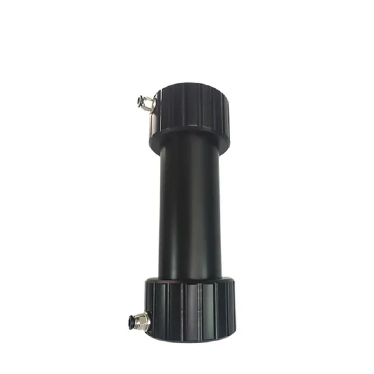
When people ask what a flow cell is used for, the simplest answer is this: a flow cell is used to guide a liquid or gas through a controlled space where it can be measured, analyzed, exposed to light, brought into contact with electrodes, or processed in a stable and repeatable way. It is a practical component, but its role is much more important than its size suggests.
In our work, we often see that many users focus first on pumps, detectors, software, or overall instrument structure. Yet the flow cell is often one of the parts that most directly affects data quality and system consistency. If fluid does not move through the right path, at the right speed, and under the right contact conditions, even a very advanced instrument may not deliver reliable results. That is why understanding the purpose of a flow cell matters not only to engineers, but also to researchers, laboratory users, and production teams.
A flow cell is a chamber, passage, or micro-structured housing designed to allow fluid to pass through a specific area in a controlled way. During this movement, the fluid can be observed, analyzed, reacted, separated, or monitored. The design may look simple from the outside, but internally it is usually created to achieve a very specific performance goal.
In some systems, the flow cell is made to provide an optical path for light-based analysis. In others, it is designed so that the sample passes over an electrode surface for electrochemical sensing. In bioprocess or medical systems, it may help maintain continuous contact between fluid and membranes, reagents, or biological materials. In each case, the flow cell is doing more than carrying the sample. It is shaping the test environment itself.
Flow cells are widely used because many modern systems no longer rely on one-time, static sample handling. Laboratories and industrial platforms often need continuous measurement, automated injection, online monitoring, lower sample waste, and better repeatability. A well-designed flow cell supports all of these needs.
When fluid moves through a controlled channel, it becomes easier to define path length, contact time, sample volume, and exposure conditions. This improves consistency between runs and reduces the variability that often appears in manual testing. For high-throughput systems, this is especially valuable. For sensitive analytical work, it is often essential.
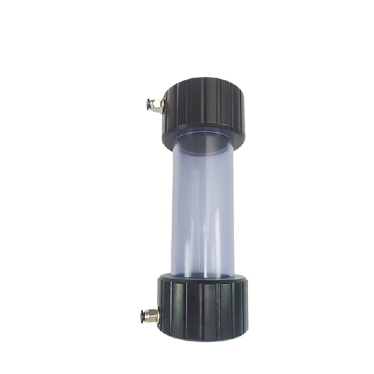
The question “what is a flow cell used for” can be understood best through its main application areas. In our experience, flow cells are widely used in laboratory analysis, diagnostics, life science research, chemical processing, and industrial monitoring.
One of the most common uses of a flow cell is optical detection. Liquid passes through a transparent chamber where light travels through or excites the sample, allowing the detector to measure absorbance, fluorescence, transmittance, or scattering.
This is widely seen in UV-Vis systems, fluorescence analyzers, water quality instruments, and automated laboratory devices. Compared with manual cuvette handling, continuous flow makes testing faster and more consistent. In these systems, channel geometry, path length, window quality, and internal volume all directly affect detection performance.
Flow cells are also important in electrochemical systems, where liquid flows past electrodes so that current, voltage, conductivity, or related responses can be measured.
They are commonly used in biosensors, environmental testing devices, industrial analyzers, and research platforms. The flow cell provides a controlled space for contact between the sample and sensing surface. Stable flow is essential, because bubbles or poor channel design can easily reduce signal quality. For real-time monitoring, this design allows analysis during operation instead of stopping for manual sampling.
In chromatography, the flow cell is often part of the detector. After separation, sample components pass through the detector flow cell, where they are measured and identified.
Here, the design must minimize dead volume, remain compatible with solvents, and keep the signal stable. Poor flow cell performance can broaden peaks, lower resolution, and increase carryover. Because chromatography depends on precise analytical results, the flow cell is an important part of the full detection pathway.
In diagnostics and life science applications, flow cells are used to handle biological samples such as blood, serum, buffers, cell suspensions, or reagent mixtures in a controlled and repeatable way.
Depending on the device, they may support optical reading, biochemical reactions, microfluidic transport, or sensor contact. Some systems use disposable flow cells to reduce contamination, while others rely on reusable versions for repeated testing. In this field, material quality, sealing, cleanliness, and biocompatibility are especially important.
Flow cells are also widely used in industrial and environmental instruments that monitor pH, conductivity, dissolved oxygen, turbidity, chemical concentration, or contamination in flowing media.
Their main advantage is online monitoring. Instead of collecting samples manually, operators can measure fluid directly in the process line or bypass loop. This improves speed, supports process control, and allows faster response to changes. In harsh environments, the flow cell must also resist pressure, corrosion, temperature variation, and aggressive chemicals.
Many people understand the use of a flow cell once they see where it fits physically, but the more useful question is what it improves. In practice, a flow cell can improve several aspects of system performance at the same time.
It improves repeatability by making the sample path consistent from one run to the next. It improves automation by allowing fluid to be handled continuously without manual transfer. It improves response speed by reducing the time between sample introduction and measurement. It can also improve sample efficiency because the internal volume is often smaller than older, more manual test arrangements.
In some systems, a flow cell helps reduce contamination by keeping the fluid path enclosed. In others, it supports safer operation by limiting operator contact with sensitive or hazardous samples. These benefits may not be as visible as a detector reading on a screen, but they are central to stable operation.
Different applications need different flow cell structures, but some core design features appear again and again.
The channel shape affects how smoothly the fluid moves. Poor geometry can create dead zones, turbulence, or trapped bubbles. Better geometry supports even flow and more reliable measurement.
A larger internal volume may be helpful for some reactions, but it can slow response time. A smaller volume often improves speed, but it may require tighter machining and more careful control of pressure and flow rate.
The flow cell material must match the application. Some systems need optical clarity. Others need chemical resistance, mechanical strength, or biological compatibility. Common materials may include glass, quartz, stainless steel, PEEK, PTFE, or engineered polymers.
A flow cell is part of the fluid path, so sealing quality is critical. Poor sealing affects accuracy, safety, and system reliability. In sensitive systems, even a small leak or air entry point can create major performance problems.
Many flow cells are not stand-alone parts. They are designed to align with optical components, electrodes, membranes, or chips. This means dimensional precision and assembly consistency are just as important as fluid handling itself.
Application Area | What the Flow Cell Does | Main Benefit |
Optical spectroscopy | Guides sample through a defined light path | Stable absorbance or fluorescence measurement |
Electrochemical analysis | Brings fluid into controlled contact with electrodes | Real-time sensing and signal consistency |
Chromatography detection | Transfers separated sample components through detector zone | Better quantification and analytical accuracy |
Diagnostics and life science | Controls movement of biological samples or reagents | Cleaner, repeatable testing conditions |
Industrial monitoring | Enables inline or bypass fluid analysis | Continuous process control |
Environmental testing | Supports direct analysis of water or chemical streams | Faster monitoring with less manual handling |
Because flow cells are closely tied to instrument design, customization is often necessary. Standard parts can be useful, especially in early testing or common applications, but many advanced systems need a flow cell tailored to their own fluid path, sensor arrangement, pressure requirement, or spatial limitation.
In our experience, customization often becomes important when a customer wants better signal stability, lower internal volume, improved material compatibility, or smoother integration with surrounding components. Even small design changes can affect performance significantly.
That is one reason flow cell development is rarely just a machining task. It usually involves thinking about fluid dynamics, measurement principles, assembly method, and long-term usability at the same time.
A flow cell is used to create a controlled environment where liquid or gas can pass through a system for measurement, detection, reaction, or monitoring. Its applications are broad, ranging from optical analysis and electrochemical sensing to chromatography, diagnostics, and industrial process control. Although it is often a small part of a larger device, it has a direct impact on fluid stability, signal quality, and overall testing consistency.
From our perspective, a well-designed flow cell helps improve repeatability, automation, and long-term system reliability. That is why it should be considered as an important functional component rather than just a simple fluid chamber. For readers who want to explore flow cell solutions in more detail, we recommend learning more from Beijing Leadmed Technology Co., Ltd. and contacting our team when practical project needs begin to take shape.
Q: What is a flow cell used for in laboratory equipment?
A: A flow cell is used in laboratory equipment to move liquid or gas through a controlled chamber for measurement, optical detection, electrochemical sensing, or reaction monitoring. It helps improve repeatability, automation, and sample handling efficiency.
Q: Why is a flow cell important for optical detection?
A: In optical detection, a flow cell creates a defined light path and stable sample environment. This makes absorbance, fluorescence, or transmittance measurements more consistent and better suited to automated analysis systems.
Q: Can a flow cell be used for industrial process monitoring?
A: Yes. A flow cell is often used for industrial process monitoring because it allows fluids to be tested inline or in a bypass loop. This supports continuous measurement, faster feedback, and improved control of process conditions.
Q: What should be considered when choosing a flow cell design?
A: Key factors include fluid type, chemical compatibility, internal volume, pressure resistance, sealing performance, optical or sensor integration, and whether the flow cell needs to be reusable or disposable.


