
Views: 0 Author: Site Editor Publish Time: 2026-04-16 Origin: Site
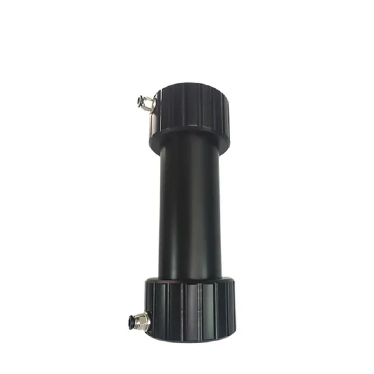
In industrial water quality monitoring, the flow cell is often a small component with a very large influence. Many users focus first on the analyzer, sensor, pump, or control software, but in our experience, the flow cell plays a direct role in whether the monitoring system performs reliably over time. It affects how the sample moves, how stable the measurement becomes, how well the sensor is protected, and how easily the system can be maintained in real operating conditions.
We often see this clearly in industrial environments where water is not always clean, stable, or easy to measure. Process water may contain particles, dissolved chemicals, scale-forming minerals, gases, biological material, or corrosive media. Under these conditions, the flow cell cannot be treated as a simple chamber for passing water from one point to another. It must be selected carefully to match both the monitoring target and the operating environment. That is why understanding the key selection criteria for flow cells in industrial water quality monitoring is so important.
A flow cell creates the controlled space where the sample meets the sensor, optical path, or measurement surface. In online and semi-online water quality systems, this controlled space is essential. Without it, sample flow may be unstable, bubbles may interfere with the reading, dead volume may increase response time, and contamination may reduce accuracy.
In industrial monitoring, the flow cell must do more than support measurement once. It must do so repeatedly and consistently over long periods. It needs to handle flow variation, pressure changes, and water chemistry differences while maintaining stable contact between the sample and the measuring element. A poor selection may lead to drift, fouling, leaks, or frequent maintenance. A suitable selection helps improve data quality and reduce operating trouble.
Before choosing a flow cell, we always believe the first step is to understand the real application rather than selecting only by appearance or general specification. Industrial water quality monitoring can include cooling water, boiler water, wastewater, ultrapure water, chemical process water, drinking water treatment, and many other conditions. Each one places different demands on the flow cell.
The chemical and physical properties of the water strongly influence flow cell selection. High salinity, aggressive cleaning agents, oxidizing media, suspended solids, oils, or biological load can all change what materials and designs are suitable. A flow cell that works well in relatively clean water may fail quickly in a harsher stream.
The monitoring parameter also matters. A flow cell used for pH or conductivity may have different design priorities from one used for turbidity, dissolved oxygen, UV absorbance, or residual chlorine. Optical applications often require clear windows and stable light paths, while electrochemical applications depend more on sensor contact and flow consistency.
Some systems monitor continuously in a process line or bypass loop, while others operate in batch or periodic sampling mode. Continuous operation usually demands stronger attention to durability, fouling resistance, and ease of maintenance.
Material selection is one of the most important criteria for industrial water quality monitoring flow cells. The material must withstand the sample itself as well as cleaning chemicals, pressure conditions, and temperature exposure.
Common material choices may include stainless steel, PEEK, PTFE, acrylic, glass, quartz, or other engineered polymers. The right choice depends on the application. For example, optical monitoring may require transparent materials or high-quality windows, while chemically demanding applications may require stronger corrosion resistance.
If the material is not compatible, several problems can appear. The surface may degrade, become cloudy, corrode, crack, or contaminate the sample. Once that happens, measurement reliability begins to fall. From our perspective, material compatibility should never be treated as a secondary issue. It is one of the core foundations of long-term system stability.
Industrial systems rarely operate under perfectly gentle conditions. Even in bypass loops, pressure can fluctuate, and temperature may vary widely depending on the process. A flow cell selected only for laboratory-like conditions may not last in actual plant use.
The housing, seals, and connection structure all need to match the real pressure and temperature range. If the design is too weak, leakage, deformation, or seal failure can occur. If it is overdesigned without reason, cost and complexity may rise unnecessarily. The goal is not simply to choose the strongest possible flow cell, but to choose one that is appropriate for the operating conditions and safety expectations.
A flow cell is not only about holding water. It is about controlling how water moves through the active zone. This is why internal geometry is such a critical selection factor.
Dead volume is any internal space where fluid remains trapped or exchanges too slowly. In water quality monitoring, excessive dead volume can delay response time and reduce the usefulness of online measurement. If process conditions change but old sample remains inside the chamber, the reading may lag behind reality.
Industrial water often contains dissolved gases or entrained air. If the flow cell design traps bubbles, the signal can become unstable. This is especially important in optical monitoring, where bubbles can interrupt the light path, but it also matters in sensor-based systems where bubble accumulation reduces contact with the sensing surface.
A well-designed flow path helps ensure the sample passes the sensing area in a predictable way. That improves repeatability and reduces drift caused by unstable local conditions.
In industrial water monitoring, the flow cell is often closely tied to the measuring principle. This means selection should consider not only fluid conditions but also how the sensor or detector works.
For optical systems, window quality, transparency, scratch resistance, and optical path design are highly important. Poor window quality can reduce signal clarity, while fouling on the window surface can make the instrument appear less stable than it really is.
For sensor-based systems, alignment, immersion depth, sealing around the probe, and contact between the sample and the sensing surface are all important. A flow cell should support the measurement principle rather than create extra variables around it.
In industrial settings, connection failure can quickly become a larger system problem. A flow cell may perform well internally, but if the seals or ports are weak, leaks, air ingress, or pressure instability can affect both safety and measurement quality.
That is why we see sealing and connection design as key selection criteria. The connection method should match the tubing, fittings, and maintenance habits of the user’s system. Seal materials should also be chosen with attention to water chemistry and cleaning agents. A strong sealing strategy helps reduce downtime and protects long-term monitoring accuracy.
One of the most practical selection criteria in industrial water quality monitoring is how the flow cell behaves over time. In many plants, the biggest challenge is not initial performance but maintaining performance after days or weeks of operation.
Scale, particles, biofilm, oils, and chemical residues may build up inside the chamber or on windows and sensor surfaces. This changes the local flow pattern and can affect the measurement result. For that reason, a suitable flow cell should be selected not only for measurement performance but also for fouling resistance and ease of cleaning.
Smooth internal surfaces, sensible channel design, good drainage, and easy access for maintenance all improve real usability. In some applications, disposable or replaceable modules may be helpful. In others, long-term reusable structures are preferred if cleaning can be done efficiently.
A flow cell should not be selected as an isolated part. It must fit the full water quality monitoring system, including pump characteristics, sensor type, connection layout, sample conditioning steps, and maintenance routine.
We often find that a technically good flow cell may still perform poorly if it does not match the surrounding system. Port position, mounting orientation, installation space, and sample flow direction can all affect actual results. Selection should therefore consider integration from the beginning rather than as a late-stage adjustment.
Selection Criterion | Why It Matters in Industrial Water Quality Monitoring | Practical Concern |
Material compatibility | Prevents corrosion, clouding, cracking, and contamination | Match the flow cell to water chemistry and cleaning agents |
Pressure and temperature resistance | Supports safe and stable operation in plant conditions | Confirm actual operating range, not only nominal conditions |
Internal geometry | Affects flow stability, dead volume, and bubble behavior | Choose designs that support fast response and even flow |
Optical or sensor interface | Protects measurement quality and signal consistency | Match window, probe, or sensing surface requirements |
Sealing and connections | Prevents leaks, air entry, and pressure instability | Select reliable seals and suitable connection methods |
Fouling resistance and cleanability | Reduces maintenance frequency and long-term drift | Look for smooth channels and practical cleaning access |
System integration | Ensures real performance in the installed system | Check fit with pumps, tubing, sensors, and layout |
In our view, the best flow cell is not always the one with the most complex design. It is the one that balances measurement performance with practical operation. In industrial water quality monitoring, users need accurate readings, but they also need systems that can run consistently with manageable maintenance effort.
That is why selection should consider the whole service life of the flow cell. A design that performs well in a short test but fouls quickly or leaks under real conditions may not be a good choice. On the other hand, a flow cell with strong materials, stable flow behavior, and easy cleaning can bring long-term value even if the initial specification looks more conservative.
Choosing the right flow cell for industrial water quality monitoring means looking carefully at the real process environment, the measurement target, and the long-term maintenance demands. Material compatibility, pressure resistance, internal geometry, sealing, fouling control, and system integration all influence whether the monitoring result remains stable and trustworthy over time.
From our perspective, a flow cell should be selected as a functional part of the measurement system, not just as a supporting accessory. When the design matches the application, it helps improve signal stability, reduce service issues, and support more reliable process decisions. For readers who want to explore flow cell solutions in more detail, we recommend learning more from Beijing Leadmed Technology Co., Ltd. and contacting our team when project requirements become more specific.
Q: What is the most important factor when selecting a flow cell for industrial water quality monitoring?
A: There is rarely one single factor, but material compatibility is often one of the most critical. The flow cell must withstand the water chemistry, cleaning agents, and operating conditions while maintaining stable measurement performance.
Q: Why does internal geometry matter in a water quality monitoring flow cell?
A: Internal geometry affects flow stability, dead volume, bubble behavior, and sensor contact. A better channel design helps improve response time, reduce signal fluctuation, and support more repeatable monitoring results.
Q: How can fouling affect flow cell performance in industrial water systems?
A: Fouling can block optical paths, reduce sensor contact, disturb local flow conditions, and increase measurement drift. That is why fouling resistance and easy cleaning are important selection criteria for long-term operation.
Q: Should a flow cell be chosen separately from the rest of the monitoring system?
A: No. A flow cell should be selected with the full system in mind, including the sensor type, tubing layout, pump behavior, sample conditioning steps, and maintenance method. Good integration is essential for reliable performance.


