
Views: 0 Author: Site Editor Publish Time: 2025-12-22 Origin: Site

Chemical Oxygen Demand (COD) is a critical water quality parameter used to measure the amount of oxygen required to oxidize the organic matter in water. This measurement is essential in evaluating the overall pollution load in wastewater. By determining the COD, we can estimate the organic pollution levels and the necessary treatment to reduce contaminants before water is released back into natural ecosystems.
COD plays a significant role in wastewater management because it quantifies organic pollution that might not be detected by other water quality tests, such as Biological Oxygen Demand (BOD). Unlike BOD, which requires days to complete, COD results are available much faster, making it a more practical choice for real-time monitoring.
Wastewater management regulations are put in place to protect both the environment and public health by ensuring that industries treat their wastewater to levels that are safe for discharge. Many countries and regions have set strict standards for wastewater quality, with specific limits on pollutants such as chemical oxygen demand (COD), biological oxygen demand (BOD), and other harmful substances. These regulations are designed to prevent pollution, protect ecosystems, and ensure safe water for consumption and recreational use. Industries, including manufacturing plants, chemical processing facilities, and municipal wastewater treatment plants, are required to comply with these standards. Failure to do so can lead to severe consequences, including hefty fines, legal penalties, and significant reputational damage. Non-compliance can also result in costly environmental remediation efforts and long-term operational disruptions. In this context, the continuous monitoring of COD levels is essential. It helps industries stay compliant, minimize risks, and optimize wastewater treatment processes for better efficiency and environmental stewardship.
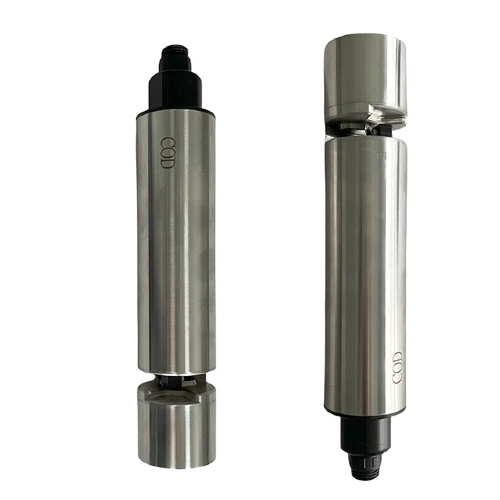
A COD sensor is a specialized instrument designed to measure the Chemical Oxygen Demand (COD) in water in real time. These sensors are integral to modern wastewater treatment systems as they help operators monitor the efficiency of treatment processes and ensure compliance with environmental regulations.
There are various methods for measuring COD, but the most common approach used in COD sensors is the UV-absorption method. The sensor works by analyzing the UV light absorption of organic materials in water, which correlates to the COD levels. This allows for continuous and accurate monitoring of wastewater quality, ensuring that it meets required standards.
Traditional Chemical COD Testing vs. Online Sensors:
Traditional COD testing methods involve taking water samples, adding reagents, and heating the samples to measure the oxygen demand. This process is time-consuming, requires chemicals, and can be prone to errors.
On the other hand, online COD sensors provide continuous, real-time data without the need for chemical reagents. These sensors are much more efficient, cost-effective, and environmentally friendly as they do not generate hazardous waste.
UV-Based COD Sensors:
UV-based COD sensors, such as Leadmed's UVCOD sensors, offer a more advanced and precise approach. They use ultraviolet light to measure the absorbance of organic compounds in the water. Since organic compounds absorb UV light, the amount of light absorbed can be directly correlated with the COD level in the water.
The core principle behind COD sensors is the measurement of UV absorption. Organic matter in water absorbs UV light at specific wavelengths, typically around 254 nm. When water is passed through the sensor, UV light is emitted onto the sample, and the absorbance is measured by a photodetector. The absorbance correlates to the COD value, which is used to assess the organic pollution load in the water.
Light Source (UV Lamp): Provides the ultraviolet light needed for the measurement.
Photodetector: Detects the amount of light absorbed by the water sample.
Processor/Controller: Analyzes the data and calculates the COD levels based on the absorbance.
No Need for Chemicals or Reagents: Traditional COD testing methods require chemical reagents, but COD sensors eliminate this step, reducing operational costs and environmental impact.
Automatic Cleaning: Many modern COD sensors, including the UVCOD sensor, come with an automatic cleaning system to prevent fouling and ensure consistent readings over time.
Real-Time Monitoring: COD sensors allow for continuous monitoring, providing operators with immediate feedback on water quality.
Data Integration: These sensors can be easily integrated into larger monitoring systems, allowing for remote data collection and real-time alerts if COD levels exceed regulatory limits.
In wastewater treatment plants, COD sensors help ensure that the treatment process is running efficiently by providing real-time data on the organic load of the water. This allows operators to adjust treatment processes such as aeration or chemical dosing based on the actual COD levels in the water, ensuring optimal treatment.
Function | Benefit |
Continuous Monitoring | Provides real-time data on COD levels for quick adjustments. |
Automated Process Control | Enables automatic adjustments in treatment processes based on COD readings. |
Improved Efficiency | Reduces energy and chemical consumption by optimizing treatment operations. |
COD sensors play a crucial role in meeting wastewater discharge regulations. Regulatory agencies set limits for the maximum permissible COD levels in discharged water. Using COD sensors ensures that wastewater treatment plants and industries can continuously monitor their effluent quality and avoid exceeding legal limits.
Failure to comply with these standards can lead to severe penalties, fines, and environmental damage, which is why COD sensors are indispensable in the wastewater treatment industry.
Reduced Need for Chemical Reagents: Traditional COD testing involves costly chemicals and labor-intensive processes. COD sensors eliminate these costs.
Lower Operational Costs: Real-time monitoring allows for more precise control of treatment processes, resulting in energy savings and reduced chemical usage.
Eco-Friendly Operations: By eliminating the need for reagents and chemicals, COD sensors contribute to more environmentally responsible wastewater treatment practices.
Reduced Waste Generation: There is no need for chemical disposal or waste generated from manual testing, making COD sensors a more sustainable solution.
Streamlined Compliance Reporting: COD sensors provide continuous data that can be easily integrated into compliance reports, simplifying the documentation process.
Real-Time Alerts: With remote monitoring and real-time data, operators are instantly notified if COD levels exceed set limits, allowing for quick corrective action.
When selecting a COD sensor, several factors must be taken into account:
Factor | Consideration |
Wastewater Composition | Determine the type of wastewater being treated. |
Measurement Range | Ensure the sensor covers the required COD measurement range. |
Maintenance Requirements | Consider how often the sensor needs calibration and cleaning. |
Integration | Ensure the sensor can easily integrate with existing monitoring systems. |
Industrial Applications: Including food processing, chemical manufacturing, and textile industries, where wastewater typically has high organic loads.
Municipal Wastewater Treatment: For monitoring the effluent quality from treatment plants.
Research and Environmental Monitoring: Used by research institutions and environmental agencies for monitoring water bodies like rivers and lakes.
In conclusion, COD sensors are essential for wastewater treatment plants and industries that require continuous monitoring of organic pollution levels in their wastewater. Compared to traditional chemical testing methods, these sensors offer significant advantages, including reduced costs, real-time monitoring, environmental sustainability, and most importantly, ensuring regulatory compliance. By integrating advanced COD sensors into their processes, industries can not only improve operational efficiency but also minimize their environmental impact. This proactive approach helps safeguard water systems and prevents the severe consequences of non-compliance with wastewater regulations. At Beijing Leadmed Technology Co., Ltd., we specialize in providing high-quality, reliable COD sensors that can support your wastewater management needs. Our solutions are designed to help you stay compliant while optimizing your wastewater treatment processes. Contact us today to learn more about how our products can benefit your operations.
Chemical COD testing requires the addition of reagents and heating to measure the oxygen demand in water, while COD sensors use UV absorption to directly measure COD in real-time, eliminating the need for chemicals.
COD sensors are highly accurate when calibrated correctly. Modern sensors also feature automatic cleaning and self-calibration mechanisms to maintain their accuracy over time.
COD sensors primarily focus on organic pollutants that consume oxygen. While they provide valuable data on the organic load, they are best used in conjunction with other sensors for a comprehensive water quality analysis.
Depending on the environmental conditions, COD sensors should be calibrated every 3–6 months. Regular maintenance, including cleaning and checking for fouling, ensures the sensor continues to perform accurately.
Industries such as food processing, pharmaceuticals, chemical manufacturing, textiles, and municipal wastewater treatment greatly benefit from using COD sensors due to their need for continuous monitoring and regulatory compliance.


