
Views: 0 Author: Site Editor Publish Time: 2026-04-21 Origin: Site
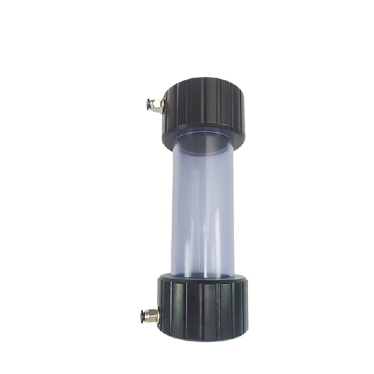
In water quality monitoring, laboratory performance and field performance are not always the same thing. A system may work well in a clean, stable testing environment, yet struggle once it is installed outdoors or connected to a real process stream. From our perspective, this is exactly where flow cell design becomes especially important. In continuous field deployment, the flow cell is not just a chamber for passing water over a sensor. It becomes the place where stability, repeatability, protection, and practical usability come together.
When we discuss flow cell water quality monitoring with customers, we often find that the main questions are not only about what the sensor can detect, but also about how the sample is introduced, how bubbles are managed, how contamination is controlled, and how the system can keep working day after day with limited intervention. Continuous field deployment places pressure on every part of the monitoring chain. The flow cell sits at the center of that chain, quietly influencing whether the data remains reliable over time.
A flow cell creates a defined environment for measurement. Instead of leaving the sensor exposed directly to uncontrolled field conditions, the flow cell helps manage how water reaches the sensing area. This improves consistency and gives the monitoring system a better chance to perform under changing external conditions.
In the field, water is rarely ideal. It may contain suspended solids, biological matter, dissolved gas, fluctuating temperature, scale-forming minerals, or chemical residues. Flow conditions may also vary, especially in outdoor systems, treatment plants, industrial sites, or remote monitoring stations. Under these circumstances, continuous monitoring depends on controlled sample handling. That is why the flow cell is so important. It helps create order around the measurement process.
At the most practical level, a flow cell works by directing water through a controlled passage where the sample can contact a sensor, optical path, or measuring interface under more stable conditions than the field itself would normally provide.
The first principle is sample control. Water enters the flow cell through an inlet, moves through an internal channel or chamber, passes the active measurement area, and exits through an outlet. This seems simple, but it allows the system to regulate sample exposure, residence time, and flow behavior more effectively than open immersion alone.
The second principle is stable interaction. The sensor or optical interface needs a consistent sample environment. If flow is erratic, if bubbles collect around the active area, or if old sample remains trapped in the chamber, the result may drift or respond too slowly. A good flow cell helps minimize these disruptions.
The third principle is protection. In many field deployments, the flow cell provides a level of shielding from debris, unpredictable turbulence, and physical disturbance. This is especially useful when the measuring element is sensitive or when the site is difficult to access for frequent service.
For continuous field deployment, flow stability is one of the most important operating principles. A sensor can only perform well when the water presented to it is reasonably consistent.
Stable flow helps maintain a predictable exchange between the sample and the measuring surface. This improves repeatability and reduces false signal variation caused by sudden hydraulic changes rather than real water quality changes.
If the flow cell allows dead zones, recirculation pockets, or sudden turbulence, the measurement may become unstable. Old sample can mix with fresh sample, response time can slow down, and air may collect inside the chamber. In field systems, these issues are common if the flow path is not carefully designed.
In long-term water quality monitoring, fouling is not a minor issue. It is one of the main reasons performance degrades over time. From our experience, a flow cell intended for continuous deployment must be selected and designed with fouling resistance in mind from the start.
Fouling may come from suspended solids, scale, biofilm, oils, iron deposits, or chemical residues. These can build up on internal walls, optical windows, or sensor surfaces. Once that happens, the local flow pattern changes and the reading may no longer reflect actual water conditions.
Smooth internal surfaces, sensible channel geometry, and easy drainage all help reduce fouling risk. Good cleanability also matters. A flow cell should not only resist buildup but also allow practical cleaning when deposits do appear. In the field, this becomes a major factor in long-term success.
Field water streams often contain dissolved gases or entrained air. Pressure changes, temperature changes, or upstream pumping conditions can cause bubbles to form inside the monitoring system. In a flow cell, bubble control is essential.
Bubbles can interrupt optical paths, reduce sensor contact, and create unstable readings. In some cases, the problem appears as drift. In others, it appears as sudden spikes or dropouts. Either way, the measurement becomes less trustworthy.
A well-designed flow cell reduces bubble trapping through proper inlet direction, chamber orientation, and outlet design. In some systems, vertical flow paths or specific venting arrangements improve gas release. For continuous field deployment, bubble behavior should be treated as a core design concern rather than an afterthought.
A flow cell must survive not only the sample itself but also the conditions around it. Field deployment often means exposure to sunlight, temperature cycling, cleaning chemicals, pressure variation, and aggressive water chemistry.
Materials such as stainless steel, PEEK, PTFE, glass, quartz, and engineered polymers each have advantages in different applications. The right choice depends on the water chemistry, measuring principle, and operating conditions. A material that performs well in a clean laboratory may not be suitable for outdoor or industrial monitoring.
For continuous deployment, the key question is not only whether the material works today, but whether it will continue working after long exposure. Clouding, corrosion, cracking, swelling, or chemical degradation can all reduce monitoring reliability.
Continuous field deployment requires more than measurement accuracy. It also requires mechanical reliability. If the flow cell leaks, allows air ingress, or loses seal performance, the monitoring result will suffer and maintenance demands will rise.
Seals, fittings, and housing structure should be chosen to match field pressure, flow rate, and maintenance routines. Good sealing helps keep the chamber hydraulically stable and prevents outside contamination from affecting the reading.
In remote or hard-to-access sites, even a small leakage issue can become a major operational problem. That is why we see sealing reliability as one of the essential principles of real field deployment, not just a secondary mechanical detail.
A flow cell designed for continuous field use should support maintenance rather than complicate it. This is especially important when systems are installed in plants, outdoor stations, or distributed monitoring networks where access may be limited.
Even a strong design will need inspection, cleaning, or replacement over time. The question is whether those tasks can be done efficiently. If cleaning requires major disassembly or if the chamber traps residues in hard-to-reach places, downtime and labor increase.
We usually view serviceability as part of performance, not separate from it. A flow cell that is easy to clean, easy to inspect, and easy to reinstall often delivers better long-term results than one that looks impressive on paper but is difficult to maintain in practice.
Principle | Why It Matters | Field Impact |
Flow stability | Supports consistent sample exposure | Improves repeatability and response reliability |
Fouling resistance | Reduces buildup on internal surfaces | Lowers drift and maintenance frequency |
Bubble management | Prevents air interference in the chamber | Improves signal stability |
Material compatibility | Protects against chemical and environmental damage | Extends service life |
Sealing reliability | Prevents leaks and air ingress | Supports safe, stable operation |
Serviceability | Makes cleaning and upkeep easier | Increases uptime in continuous deployment |
A flow cell should never be selected in isolation. In continuous field deployment, it must work with the complete system, including sample lines, pumps, valves, filters, sensors, and maintenance procedures. Good integration often matters just as much as individual part quality.
The port position, orientation, internal volume, and mounting arrangement all influence actual performance. A technically suitable flow cell may still perform poorly if it does not match the surrounding system layout. That is why we usually recommend considering the full monitoring path from the beginning. A flow cell should support the system architecture rather than force compromises later.
In real water quality monitoring, the best flow cell is not always the one with the most complex design. It is the one that creates stable measurement conditions while remaining durable and practical in the field. Continuous deployment rewards designs that balance sensitivity with robustness and accuracy with maintainability.
From our point of view, the essential principles are clear. The flow cell must manage sample flow well, resist fouling, control bubbles, match the chemical environment, maintain sealing integrity, and remain serviceable over time. When these principles are respected, the monitoring system has a much stronger foundation for long-term field performance.
Flow cell water quality monitoring for continuous field deployment depends on more than placing a sensor inside a chamber. It requires controlled sample movement, stable interaction with the measuring zone, effective bubble and fouling management, suitable materials, reliable sealing, and practical maintenance access. These principles help turn a measurement setup into a dependable long-term monitoring solution.
In our experience, a well-chosen flow cell supports not only better data but also smoother day-to-day operation in real environments. For teams evaluating water quality monitoring systems or refining field deployment strategies, it is worth looking closely at the role the flow cell plays in overall reliability. Readers who would like to explore this topic further are welcome to learn more from Beijing Leadmed Technology Co., Ltd. and contact our team when specific project requirements begin to take shape.
Q: Why is a flow cell important in continuous water quality monitoring?
A: A flow cell creates a controlled environment for the sample to reach the sensor or optical interface. This improves flow stability, reduces outside interference, and helps the monitoring system deliver more consistent long-term results.
Q: How does fouling affect flow cell water quality monitoring?
A: Fouling can coat internal surfaces, block optical paths, reduce sensor contact, and change local flow behavior. Over time, this may cause drift, slower response, and more frequent maintenance in continuous field deployment.
Q: What should be considered when choosing flow cell materials for field deployment?
A: Material selection should consider water chemistry, temperature changes, cleaning agents, pressure conditions, and outdoor exposure. The best material is one that remains stable and compatible over long-term operation, not just during initial testing.
Q: Can a flow cell reduce bubble-related measurement problems in field systems?
A: Yes. A properly designed flow cell can reduce bubble trapping through better chamber orientation, inlet and outlet layout, and smoother internal flow paths. This is especially important for optical and sensor-based water quality monitoring systems.


