Views: 0 Author: Site Editor Publish Time: 2026-06-01 Origin: Site

Industrial facilities and environmental monitoring agencies face increasing regulatory pressure today. Missing a single parameter fluctuation easily results in severe compliance violations. You could also face sudden process failure. Consolidating individual probes into a single multiparameter instrument reduces your overall deployment footprint. However, it introduces complex evaluation criteria. You must carefully assess cross-interference. You must evaluate sensor lifespan. You also need to plan your data integration. Balancing these factors requires a deep understanding of environmental monitoring hardware. This guide provides an evidence-based framework for evaluating these complex instruments. We will help you shortlist and implement commercial-grade multiparameter sondes effectively. You will learn how to navigate the current market without falling for exaggerated "zero-maintenance" claims. We provide actionable insights to secure your compliance status. Read on to discover how to optimize your sensing capabilities. We will help you streamline your environmental reporting workflows.
Transitioning from single-parameter probes to a consolidated multiparameter sonde reduces telemetry costs but requires strict anti-fouling strategies.
Evaluation must prioritize sensor drift rates and calibration frequency over raw theoretical accuracy.
Selecting between continuous inline models and a portable water quality sensor depends entirely on the required Quality Assurance/Quality Control (QA/QC) validation frequency.
You must manage multiple individual sensors for a complete water profile. Managing individual sensors for pH, turbidity, and oxygen introduces compounding points of failure. They demand varied calibration schedules. This fragments your maintenance routines heavily. It creates disjointed data silos in your SCADA systems. Your operators struggle to unify these disparate data streams. We must overcome these limitations to achieve operational efficiency.
Environmental fines can cripple an industrial operation overnight. Regulatory bodies demand continuous, highly accurate water effluent records. When you manage separate probes, your technicians spend hours walking the plant. They must pull each sensor independently. They bring varying calibration fluids for each device. This process burns valuable labor hours. It also introduces high human error rates. Consolidating your sensors solves this logistical nightmare immediately. You simply pull one consolidated sonde. You calibrate all parameters in a single cup. Your data streams unify into one clean Modbus register.
A successful deployment requires strict criteria. A deployment must reduce total calibration man-hours by at least 40 percent. Concurrently, it must maintain compliance-grade accuracy. Sometimes it can even exceed regulatory expectations. You achieve this through hardware consolidation. Consolidating into one multi-probe unit streamlines operations. It reduces the physical footprint at your monitoring station.
Relying on aging sensors increases your operational risk. Disparate sensors often experience undetected drift over time. This drift skews your reporting. Consolidating into one unit forces a standardized protocol. It makes your maintenance fully auditable. We mitigate risk by centralizing our hardware. You gain complete control over your measurement baseline.
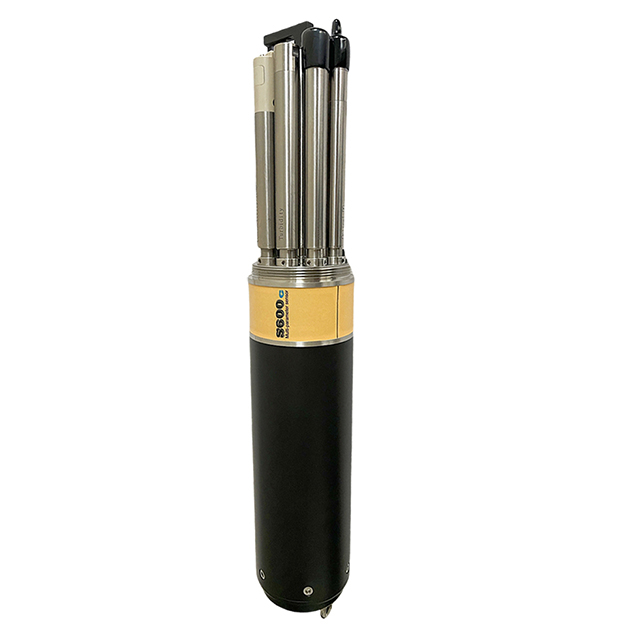
We must understand the component architecture first. A central sonde acts as the main brain. It integrates various interchangeable smart sensors. This modular design simplifies field replacements immensely. You can swap a faulty probe quickly. You do not need to replace the entire instrument.
Electrochemical realities govern the Water pH Sensor. You must evaluate reference junction depletion rates. Electrolyte solutions inside the probe degrade over time. You must schedule required electrolyte replenishment carefully. If you ignore this, readings will inevitably drift. You will report false acidity levels.
You must shift your oxygen measurement technology. We mandate a move from galvanic sensors. You must adopt Luminescent/Optical Dissolved Oxygen (LDO) technology. This shift eliminates flow-dependency. It heavily reduces your calibration frequency. An optical Dissolved Oxygen Sensor offers superior long-term stability. It does not consume oxygen during measurement. Maintenance becomes surprisingly simple. You do not refill messy electrolyte fluids. You do not polish delicate membranes. You simply swap the optical luminescent cap annually. This cap contains the active sensing dye. This dye degrades predictably over time under UV exposure.
Optical backscatter performance defines the Water Turbidity Sensor. You must verify ISO 7027 compliance. Industrial effluent contains heavy suspended solids. Therefore, you must assess the necessity of integrated mechanical wipers. Wipers keep the optical windows perfectly clean. They prevent algae from blinding the sensor. Calibration standards matter here. You traditionally use Formazin standards. However, Formazin is highly toxic. It degrades quickly in storage. Modern sensors often support safer polymer bead standards. These beads offer longer shelf life. They provide safer handling for your technicians.
Premium manufacturers carefully isolate electrical signals. This prevents cross-talk between sensors. Conductivity and pH measurements often interfere. They share the same water ground. Good internal isolation prevents this electrical interference. It ensures independent, accurate parameter readings.
Sensor Type | Underlying Technology | Primary Vulnerability | Recommended Mitigation |
|---|---|---|---|
pH/ORP | Electrochemical Glass Bulb | Reference Junction Depletion | Routine electrolyte gel replacement |
Dissolved Oxygen | Luminescent/Optical (LDO) | Sensing Dye Photobleaching | Annual replacement of optical sensor cap |
Turbidity | Optical Backscatter (ISO 7027) | Biofouling & Optical Blinding | Integrated central mechanical wiper |
Conductivity | 4-Electrode Graphite Cell | Mineral Scale Buildup | Periodic mild acid bath cleaning |
Continuous inline and submersible deployments serve demanding environments. They operate 24/7 in industrial outfalls. You also find them in aquaculture facilities. Municipal water treatment plants rely on them heavily. A robust Multiparameter Water Quality Sensor needs industrial telemetry. It requires RS485/Modbus or SDI-12 outputs. These protocols enable direct integration into your plant logic. They feed data straight to your PLC.
Let us review the communication protocols. SDI-12 offers distinct advantages for remote monitoring. It requires extremely low power. You can daisy-chain multiple sondes on one cable. This protocol dominates groundwater monitoring networks. RS485 Modbus RTU serves industrial plants better. It allows high-speed data polling. It integrates smoothly into legacy PLC architectures. You must select the protocol matching your power constraints.
Field teams rely heavily on portable assessments. A high-quality Portable Water Quality Sensor handles spot-checking easily. You use it for groundwater sampling. You also use it to validate your fixed continuous sensors. It acts as your mobile truth-source.
When evaluating portable solutions, consider these key metrics:
Handheld meter battery life for long field days.
Ruggedness and IP67+ weatherproofing ratings.
Intuitive, field-ready software interfaces.
Ergonomic grip for extended field use.
Selection logic dictates strict boundaries. Do not use portable sondes for permanent deployment. They lack sufficient power management. They also lack heavy-duty anti-fouling capabilities. You will experience rapid sensor degradation. You must deploy the right tool for the environment.
Feature Profile | Fixed Continuous Sonde | Portable Assessment Sonde |
|---|---|---|
Power Source | External mains or large solar array | Internal rechargeable battery pack |
Telemetry Integration | RS485 Modbus, SDI-12, 4-20mA | Bluetooth to handheld or mobile device |
Anti-Fouling Tech | Mechanical wipers, copper mesh | Minimal passive resistance |
Primary Use Case | 24/7 effluent compliance monitoring | Daily spot-checking and equipment validation |
We must dispel the "zero-maintenance" myth entirely. All sensors eventually foul. They all experience sensor drift. You must acknowledge this physical reality. Frame maintenance as a predictable operational requirement. Do not view it as a product flaw. Regular upkeep guarantees highly reliable data. It protects your compliance standing.
Adhering to strict calibration SOPs is critical. You must document these Standard Operating Procedures clearly. Align them strictly alongside USGS or EPA guidelines. Multi-point calibration ensures accuracy across the full measurement range. A single-point check is never enough.
Here are the essential steps to build your SOP:
Rinse all probes thoroughly using deionized water to prevent cross-contamination.
Apply fresh, unexpired standard buffer solutions specific to your expected measurement range.
Allow temperature readings to stabilize completely before accepting the measurement value.
Execute a multi-point calibration for precise slope calculation and offset adjustment.
Record the pre-calibration and post-calibration values digitally for your audit trail.
Combating biofouling requires multiple strategies. You must evaluate active and passive anti-fouling technologies. Copper-alloy components offer excellent passive resistance. They naturally inhibit biological growth. Central mechanical wipers actively clear debris. They sweep the sensor faces periodically. Localized ultrasonic cleaning prevents biofilm formation. You must match the technology to your specific environment.
Biofilm development follows a predictable curve. Initially, organic molecules coat the sensor face. This happens within minutes of deployment. Next, pioneer bacteria attach to this coating. They secrete a sticky extracellular matrix. This matrix traps suspended particles rapidly. Finally, algae and macro-organisms colonize the surface. Your mechanical wipers must interrupt this cycle early. They must sweep before the sticky matrix hardens. If biofilm matures, wipers become completely ineffective. You will need manual acid baths to clean the probes.
Demand complete data transparency from your vendors. Reject vendors hiding their true drift specifications. You need explicit data on sensor drift over a 30-day deployment. If they cannot provide this, walk away immediately. Transparent manufacturers publish their drift rates proudly.
Prioritize modularity and hardware upgradability. Look for platforms offering field-swappable probes. You should replace components directly on-site. Avoid systems requiring a factory RMA (Return Merchandise Authorization). RMAs cause unacceptable monitoring downtime. They force you to keep expensive backup units. True modularity keeps your station online.
Verify all compliance and certification claims carefully. The measurement methodologies must meet local regulatory standards. You need EPA-approved methods for compliance reporting. Non-compliant data holds absolutely zero legal weight. It will fail an environmental audit. Ensure the vendor guarantees standard method compliance.
Take decisive next-step action today. Request a 30-day field trial from the manufacturer. Test the equipment in your specific effluent matrix. You must prove the anti-fouling effectiveness yourself. Do this before committing to fleet-wide procurement. Real-world testing exposes hidden product flaws quickly.
Procuring these instruments is never a commodity purchase. It represents a major investment in your facility's compliance infrastructure. Base your purchasing decisions on the hard realities of your deployment environment. You must account for biofouling potential and integration requirements. Do not rely solely on glossy marketing spec sheets.
Consolidate your single probes to eliminate data silos and streamline maintenance routines.
Prioritize optical measurement technologies and field-swappable modularity.
Establish rigorous, documented calibration SOPs to ensure strict legal compliance.
Demand physical field trials to validate vendor anti-fouling hardware claims.
Consult with a specialized application engineer today. Review your specific site requirements thoroughly. Request a customized integration proposal to secure your environmental monitoring future effectively.
A: Probe lifespan varies significantly by parameter. Electrochemical pH probes typically last 12 to 18 months before reference junction depletion. Optical dissolved oxygen caps usually function well for one to two years. Turbidity hardware lasts much longer, but you must replace the mechanical wiper brushes annually to maintain performance.
A: You should verify calibration daily when conducting fieldwork. Standard QA/QC protocols require a pre-sampling day calibration check. You must also perform a post-sampling day verification check. This guarantees data integrity. If the probe drifts outside acceptable limits, you must recalibrate it immediately.
A: Yes, modern sondes support direct integration. Most industrial units offer standard digital outputs. You can utilize RS485 Modbus RTU or SDI-12 protocols. These allow seamless connection to existing Programmable Logic Controllers (PLCs) or SCADA systems without requiring proprietary intermediate controllers.
A: Optical sensors easily misinterpret micro-bubbles as suspended solids. This physical limitation causes erratic spikes in aerated environments. You can mitigate this issue by adjusting your deployment angle. Installing the sonde at a 45-degree angle helps bubbles deflect. Alternatively, you can use specialized debubbling flow cells.