Views: 0 Author: Site Editor Publish Time: 2026-06-04 Origin: Site

Accurate acidity measurement dictates success in industrial and environmental operations. A slight deviation can trigger severe compliance fines, cause process inefficiencies, or accelerate equipment corrosion. Operators face immense pressure to maintain tight chemical control under harsh conditions.
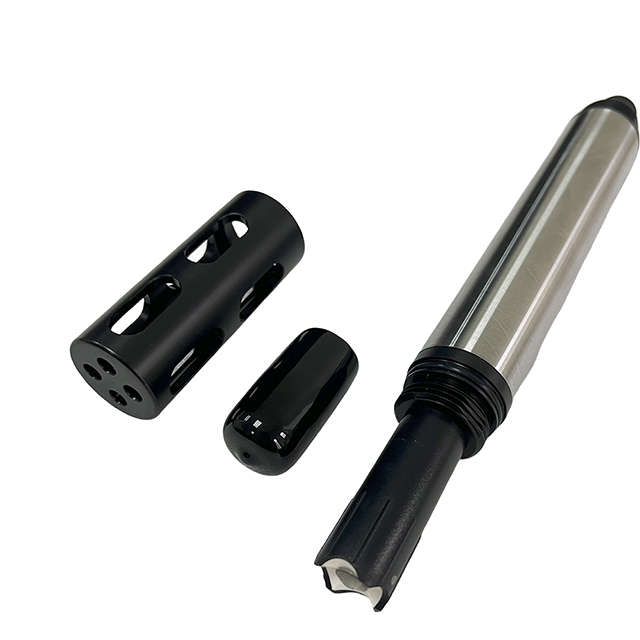
Relying on manual grab-sampling introduces dangerous delays and human error. Operators cannot react fast enough to sudden shifts. You need real-time data to prevent costly chemical imbalances. We position the continuous, online Water pH Sensor as a critical risk-mitigation tool for modern wastewater and process control systems.
This article explores how to select and deploy these essential instruments. We provide a strictly technical, vendor-neutral framework for evaluating, integrating, and maintaining industrial electrodes. You will learn how to optimize your monitoring strategy and eliminate operational blind spots.
Transitioning to an online water pH sensor reduces operational blind spots but requires careful pairing of electrodes with appropriate transmitters.
Sensor lifespan is dictated primarily by reference junction design and self-cleaning capabilities, not initial purchase price.
Digital and smart sensor architectures streamline calibration and predict maintenance needs, lowering long-term labor costs.
Complete environmental compliance often requires integrating pH monitoring with a broader multiparameter water quality sensor network.
Selecting the right electrode begins by mapping your application. You must profile the physical and chemical environment accurately. Every process exhibits unique stressors. We break this evaluation into three critical areas:
Temperature Fluctuations: Rapid heating and cooling cycles create thermal shock. They can fracture delicate glass membranes easily. Extreme heat also degrades internal reference gels. You must account for maximum peak temperatures during cleaning cycles.
Pressure Extremes: High pressure forces external fluids into the sensor junction. This destroys the reference cell rapidly. Deep tank submersion and pressurized pipes require robust designs. You often need solid polymer reference systems to resist pressure.
Chemical Compatibility: Harsh chemicals attack sensor bodies aggressively. Solvents dissolve standard plastics in hours. Heavy metals accumulate heavily on the glass bulb. Sulfides act as severe poisoning agents. They react aggressively, ruining standard sensors quickly. You must match sensor construction materials to your process chemistry.
Reference fouling causes most premature failures. You must protect the internal reference wire from process contamination. Engineers rely on specific junction designs for this protection.
Single junction electrodes work well in clean environments. They offer basic functionality for light-duty monitoring. Double junction electrodes provide much better defense. They utilize two separate chambers. This creates a longer pathway for contaminants to travel. They resist sulfide and heavy metal poisoning highly effectively.
Junction materials also dictate overall performance. You should match the material to your specific particulate load. Ceramic junctions suit relatively clean fluids perfectly. Porous Teflon (PTFE) resists fouling in dirtier applications. It naturally repels sticky substances and oils. Open aperture junctions handle heavy sludge seamlessly. They provide a large opening instead of micropores. This prevents clogging entirely in demanding wastewater streams.
Signal integrity defines measurement accuracy. Analog probes send weak millivolt signals to the controller. Moisture easily compromises these delicate transmissions. Long cable runs invite significant ground loop interference. You often struggle to isolate analog noise in complex industrial plants.
Digital sensors solve these transmission problems completely. They convert the analog voltage inside the sensor body itself. They send a robust digital signal directly to the controller. You avoid ground loop issues entirely. Digital architecture allows simple laboratory pre-calibration. You simply swap a calibrated probe into the active process line. Smart sensors also store diagnostic data locally. They monitor glass impedance constantly. This enables true predictive maintenance scheduling for your plant.
Operators often focus solely on the initial purchase price. This overlooks the massive labor expenses involved over time. Routine calibration demands significant technician time. You must factor in necessary system downtime. Consuming standard buffer solutions continuously adds up fast. Frequent calibration cycles drain maintenance budgets heavily.
Field calibration poses severe logistical challenges. Technicians face harsh weather and dangerous chemicals during routine checks. They struggle to stabilize readings in sub-optimal conditions. Plug-and-play digital integration changes this entirely. You calibrate a spare probe offline in a controlled, clean laboratory. A technician simply swaps the probes at the process pipe. This reduces field exposure drastically. It cuts downtime from several hours down to a few minutes.
High-particulate applications coat electrodes rapidly. You must deploy cleaning automation to extend lifespan. Manual cleaning wastes valuable labor and damages fragile glass. We compare common automated cleaning strategies below.
Cleaning Method | Mechanism | Best Application | Key Advantage |
|---|---|---|---|
Mechanical Brush | Motorized wiper sweeps the glass. | Heavy sludge, bio-fouling | Physically removes stubborn coats. |
Hydrodynamic Spray | Air or water blasts the sensor. | Suspended solids, sticky resins | No moving parts touch the glass. |
Flat-Surface Design | Fluid velocity shears debris away. | High flow rate pipes | Passive, requires no external power. |
Mechanical cleaning uses automated brush mechanisms. They wipe the glass surface at set intervals automatically. They excel against thick biological growth. Hydrodynamic cleaning utilizes targeted spray nozzles instead. A burst of compressed air or clean water blasts the sensor clean. They work beautifully for sticky, viscous process fluids.
Flat-surface designs offer a brilliant passive solution. They eliminate the protruding glass bulb completely. Process fluid rushes past the flat surface rapidly. The fluid velocity naturally scours the measuring glass clean. You achieve a highly effective self-cleaning effect without any moving parts.
You must set realistic replacement schedules for your instruments. Electrodes are consumable items by nature. Application severity dictates their usable lifespan. Ultra-pure water lacks conductive ions entirely. It depletes sensor electrolytes very slowly. You might achieve a two-year lifespan easily.
Industrial effluent presents a completely different operational reality. Harsh chemicals and abrasives degrade materials constantly. You might need to replace probes every three to six months. We strongly advise tracking failure rates closely. You can establish a baseline replacement schedule for each specific measurement point. This prevents unexpected failures and ensures continuous compliance reporting.
A reliable measurement loop relies on three distinct components. First, the probe contacts the process fluid directly. Second, the transmitter processes the raw signal. Third, the centralized controller acts upon the data. You must clarify their distinct roles carefully during system design.
Modern facilities demand direct SCADA and PLC integration. You should evaluate available communication protocols carefully. Modbus RTU offers robust serial networking. Profibus integrates deeply into complex automation environments. Traditional 4-20mA loops still provide reliable point-to-point connections. Direct digital integration eliminates redundant signal conversions entirely.
You rarely monitor acidity in isolation. Complete process control requires holistic data analysis. You must sync multiple parameters to understand environmental shifts fully.
Acidity changes often correlate with physical water conditions. You gain critical insights by syncing data with a Water Turbidity Sensor. Spikes in suspended solids frequently precede chemical imbalances. You can track these events simultaneously to prevent upsets.
Wastewater treatment plants require advanced biological control. Aeration basins demand precise oxygen management continuously. You achieve holistic control by utilizing a Dissolved Oxygen Sensor alongside your acidity monitoring. The controller uses both inputs to optimize blower speeds automatically.
Managing separate controllers creates an integration nightmare. You face excessive wiring and complicated panel layouts. We recommend consolidating your data footprints thoroughly. You should deploy a centralized Multiparameter Water Quality Sensor controller. This single device handles multiple probes simultaneously. It reduces wiring complexity significantly. It streamlines your SCADA integration process beautifully.
Plant operators employ two distinct monitoring strategies. You must understand when to apply each method effectively. Spot-checking provides quick, localized insights. Continuous measurement drives automated process control.
Field technicians rely heavily on handheld devices daily. A Portable Water Quality Sensor serves as an invaluable auditing tool. You use it for spot-checking different tank levels. It validates the readings of fixed instruments. It provides redundant auditing for environmental compliance reporting. However, manual checks cannot catch sudden process spikes.
Closed-loop automation requires uninterrupted data streams. Inline and online systems provide this constant visibility. They are mandatory for continuous compliance reporting. You cannot dose neutralization chemicals accurately without real-time feedback. Online systems eliminate the dangerous delay of manual sampling entirely.
Proper installation guarantees accurate, real-time data. Poor mounting locations ruin even the best sensors quickly. You must choose the right configuration for your specific vessel.
Submersion Mounting: You drop the probe directly into open tanks or channels. You must use a sturdy extension pipe. It protects the delicate cable from direct chemical exposure.
Insertion Mounting: You install the probe directly through a tank wall. You often use a retraction assembly. This allows safe sensor removal without draining the entire tank.
Flow-Through (Bypass) Mounting: You divert a small sample stream into a dedicated measuring cell. This protects the probe from main-line pressure spikes. It simplifies maintenance access greatly.
You must adhere to strict angle requirements. Never install a standard glass bulb horizontally. You must mount it at least 15 degrees above the horizontal plane. This ensures internal electrolyte contacts the glass bulb continuously. It prevents internal air bubble entrapment. Air bubbles block the electrical circuit and cause erratic readings.
Selecting the right vendor is as critical as choosing the hardware. You must evaluate long-term support capabilities carefully. We provide a structured buyer's checklist to guide your decision process.
You need extensive technical documentation for smooth integration. Assess the availability of accurate 3D CAD models. Engineers need these models for panel and piping design. Verify they provide comprehensive integration manuals. Look for step-by-step PLC communication guides. You must ensure they offer accessible, expert technical support. Complex field issues require immediate troubleshooting assistance.
Industrial environments mandate strict safety and environmental standards. You must verify all necessary product certifications before purchasing.
CE Marking guarantees compliance with European health and safety directives.
RoHS certification ensures the absence of specific hazardous materials in the electronics.
Explosive atmospheres require highly specialized equipment. You must secure ATEX or Class 1 Div 1 hazardous area ratings.
Never standardize a new electrode across a multi-site operation immediately. You must establish a localized proof of concept first.
Select your harshest measurement point for the pilot test.
Install the new probe alongside your existing technology.
Monitor the data drift over a consecutive four-week period.
Track calibration frequency and required maintenance labor accurately.
Evaluate the integration process with your existing PLC network.
Once the pilot proves successful, you can confidently roll out the solution globally.
We must balance process-specific durability with seamless digital integration. The optimal industrial online instrument handles extreme chemistry while delivering reliable SCADA data. You protect your operations by selecting robust reference systems. Accurate environmental profiling prevents premature failures entirely.
Investing in the correct junction technology pays massive dividends. Deploying automated cleaning systems reduces maintenance overhead substantially. You keep technicians out of hazardous field environments. You extend probe lifespans dramatically by preventing heavy fouling.
Take action immediately to optimize your analytical systems. We highly recommend consulting with specialized application engineers. Review your process schematics thoroughly before finalizing procurement. Expert guidance ensures you deploy the perfect measurement architecture for your specific facility.
A: Calibration frequency depends strictly on your process conditions. Harsh wastewater applications often require weekly calibrations due to rapid fouling. Clean water systems might only need monthly attention. Modern smart sensors feature diagnostic algorithms. They monitor glass impedance and reference stability continuously. You should use these predictive diagnostics to dictate calibration schedules rather than relying on arbitrary timelines.
A: Yes, direct integration is entirely possible with the right hardware. Digital sensors often feature built-in Modbus RS485 communication directly inside the sensor head. You wire these directly into your PLC's input modules. Traditional analog setups strictly require an intermediate analyzer or transmitter to convert the weak millivolt signal into a robust industrial protocol.
A: Drifting readings indicate technical interferences or physical blockages. Ground loop interference frequently disrupts analog signals across long cable runs. A clogged reference junction prevents proper electrical contact with the process fluid. Additionally, severe temperature fluctuations cause thermal delays. The sensor's temperature compensation element needs time to equilibrate. You must verify probe cleanliness and electrical isolation to stop drifting.
A: The difference lies entirely in the installation method. Inline sensors integrate directly into pressurized process pipes. You mount them using threaded connections or flanged fittings to monitor active flow. Submersible sensors drop into open tanks, aeration basins, or effluent channels. You attach them to a rigid extension pipe to protect the cable from direct fluid exposure.