
Views: 0 Author: Site Editor Publish Time: 2025-12-08 Origin: Site

Are you curious about how scientists measure the saltiness of water? Salinity sensors are crucial for understanding water quality and oceanography. Accurate salinity measurement impacts marine life, agriculture, and industry. In this post, you'll learn about salinity sensors, their importance, and how they work.
Salinity refers to the concentration of dissolved salts in water. It plays a crucial role in understanding water quality, oceanography, and many industrial processes. The measurement of salinity helps us gauge how salty a water sample is, which affects marine life, water density, and chemical properties.
Salinity is not just about tasting saltiness; it’s a key scientific parameter. It influences water density, circulation patterns in oceans, and even climate systems. In agriculture and aquaculture, knowing salinity helps maintain healthy crops and aquatic life. In industry, salinity levels affect processes like water treatment and chemical manufacturing.
Measuring salinity accurately is vital. However, salinity itself isn’t directly measurable. Instead, sensors measure related properties like electrical conductivity, which correlates with salt concentration. This indirect method requires converting conductivity readings to salinity values using established formulas.
There are two main ways to express salinity: practical salinity and absolute salinity.
Practical Salinity is the most commonly used measure. It derives from electrical conductivity relative to a standard seawater solution. This method accounts for temperature and pressure effects, making it practical for oceanographic measurements. It’s expressed in units without dimensions, often as a number around 35 for typical seawater.
Absolute Salinity refers to the actual mass of dissolved salts per unit mass of seawater. It is more precise but harder to measure directly. Absolute salinity accounts for variations in seawater composition, such as those caused by freshwater input or differing salt types.
The difference between these two is subtle but important for high-precision scientific studies. For most practical applications, practical salinity provides reliable and consistent results.
Since salinity sensors measure electrical conductivity, understanding this relationship is key. Conductivity increases as the number of dissolved ions rises. The sensor measures how well the water conducts electricity, then software converts this into a salinity value.
Temperature and pressure also impact conductivity readings. Sensors often include temperature compensation to adjust for these factors, ensuring accurate salinity calculations.
In the field of water quality measurement, two primary types of salinity sensors are widely used: platinum electrode conductivity sensors and electrodeless conductivity sensors, also known as inductive sensors. Each type offers unique advantages and disadvantages, making them suitable for different applications.
Principle of Operation This sensor operates based on the conductivity principle. It measures how well a solution conducts electric current between two platinum electrodes immersed in the water sample. When ions are present in higher concentrations, they facilitate better conduction, resulting in higher conductivity readings. The sensor applies a voltage across the electrodes, and the resulting current correlates with the solution’s conductivity.
Design and Construction The typical design involves a borosilicate glass cell, about 191 mm long, with a diameter of 4 mm between the platinum electrodes. The electric field lines are confined within the cell, preventing interference from nearby objects, which enhances measurement accuracy. The conductance (G) is measured in siemens, and the conductivity (C) is calculated by multiplying conductance with the cell constant (kc), which depends on the electrode's geometry.
Advantages
Well-understood and widely used in scientific and industrial settings.
Easy calibration in small baths.
Can be integrated into multiparameter systems, measuring other water quality parameters.
Disadvantages
Electrodes are susceptible to corrosion, fouling, or damage over time.
Changes in the cell constant impact measurement accuracy.
Requires cleaning and maintenance, especially in harsh environments.
Field calibration can be challenging if electrodes are damaged or contaminated.
Principle of Operation Inductive sensors use electromagnetic coils to measure conductivity without direct contact with the water. They consist of two coils—one generating an alternating magnetic field (primary coil) and the other detecting the induced current (secondary coil). When the sensor is immersed in a conductive liquid, the primary coil induces an alternating current in the water, which then induces a voltage in the secondary coil proportional to the solution’s conductivity.
Design and Construction Coils are embedded in a polymer or ceramic body, forming a sealed, robust unit. The liquid forms a closed conductive loop passing through the coils, allowing the sensor to measure conductivity indirectly. This design eliminates direct contact between electrodes and water.
Advantages
Highly durable and resistant to corrosion.
Easier to clean—soap or solvents, brushes suffice.
No electrodes mean no risk of corrosion or fouling.
Suitable for harsh environments and long-term deployments.
Disadvantages
External electromagnetic fields can interfere with measurements.
Requires a larger clearance radius from other surfaces or sensors—about 3 inches—to prevent interference.
Calibration must be performed with the fully assembled package to account for external influences.
Mounting and calibration can be more complex, especially in mobile or embedded systems.
| Feature | Platinum Electrode Sensor | Inductive Sensor |
|---|---|---|
| Operation | Direct contact with water | Indirect measurement via electromagnetic induction |
| Durability | Susceptible to corrosion & fouling | Very robust, resistant to corrosion |
| Calibration | Easy in small baths | Requires calibration of entire assembly |
| Maintenance | Needs regular cleaning | Minimal maintenance, easy cleaning |
| Interference | Less affected by external fields | Sensitive to electromagnetic interference |
Choosing the right sensor depends on your environment, maintenance capacity, and measurement needs. For example, electrode sensors work well in controlled lab conditions, while inductive sensors excel in harsh, long-term deployments.
Salinity sensors primarily work by measuring electrical conductivity in water. Conductivity indicates how well water can carry an electric current, which depends on the amount of dissolved salts or ions. The more ions present, the higher the conductivity.
A typical sensor applies a small voltage between two electrodes or coils immersed in water. The current flowing between them is measured. This current increases as ion concentration rises. The sensor then converts this electrical signal into a conductivity value, usually expressed in microsiemens per centimeter (µS/cm).
Since salinity itself cannot be measured directly, conductivity serves as a reliable proxy. The sensor’s software uses established formulas to translate conductivity into salinity units like practical salinity units (PSU) or parts per thousand (ppt).
Temperature strongly affects conductivity readings. Warmer water increases ion mobility, raising conductivity. To ensure accuracy, sensors include temperature compensation. They measure water temperature simultaneously and adjust conductivity values accordingly.
Pressure also influences conductivity, especially in deep ocean environments where water pressure is high. Increased pressure compresses water, changing ion interactions and conductivity. High-end sensors account for pressure variations to maintain precise salinity measurements in such conditions.
Many commercial salinity sensors feature automatic temperature compensation (ATC). This feature adjusts readings on the fly, eliminating the need for manual corrections. Some advanced models also incorporate pressure sensors for deep-sea applications.
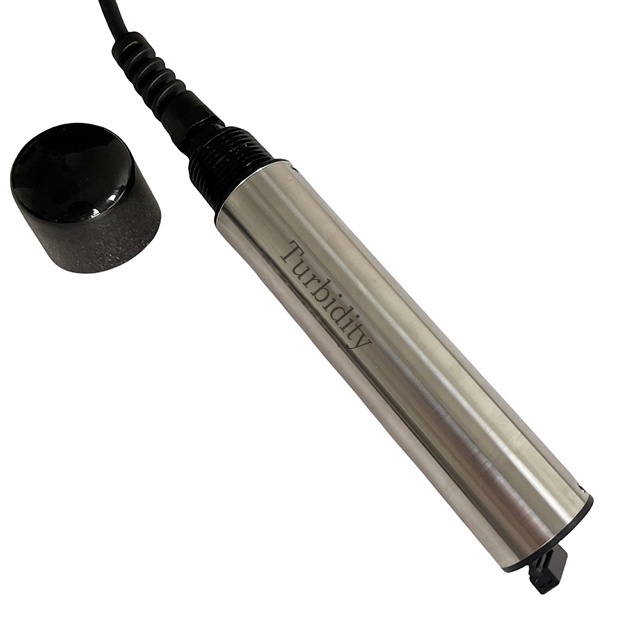
Salinity sensors play a vital role across various fields, helping professionals monitor water quality and ensure safety, efficiency, and environmental protection. Their diverse applications include marine and oceanographic research, agriculture and aquaculture, and industrial and environmental monitoring.
Scientists rely heavily on salinity sensors to study ocean behavior and climate patterns. Salinity influences water density, which drives ocean currents and affects global climate systems. By deploying sensors in different ocean regions, researchers can track changes in salinity over time, gaining insights into phenomena like sea level rise, melting glaciers, and ocean circulation shifts.
These sensors are essential for long-term monitoring programs, especially in remote or deep-sea environments. Inductive sensors, with their durability and resistance to corrosion, are often preferred for such deployments. They provide reliable data over extended periods, helping scientists understand complex ocean processes without frequent maintenance.
In agriculture, maintaining appropriate soil and water salinity levels is critical for crop health. Excessive salinity can hinder plant growth, reduce yields, and even kill crops. Salinity sensors allow farmers to monitor irrigation water and soil conditions in real time, enabling precise management of water use and salinity control.
Aquaculture operations also depend on salinity measurements. Fish and other aquatic species thrive within specific salinity ranges. Sensors help aquaculture farmers adjust water conditions, ensuring healthy growth and preventing disease outbreaks. Portable and waterproof salinity meters are popular tools in these settings, offering quick and accurate readings on-site.
Industries use salinity sensors to control processes such as water treatment, chemical manufacturing, and waste management. For example, in desalination plants, sensors monitor brine concentrations to optimize salt removal. In chemical industries, maintaining specific salinity levels ensures product quality and process efficiency.
Environmental agencies deploy salinity sensors to monitor pollution levels in lakes, rivers, and wetlands. Elevated salinity can indicate pollution from industrial runoff or wastewater discharge. Continuous monitoring helps detect contamination early, enabling swift action to protect ecosystems and public health.
In wastewater treatment, sensors ensure that discharged water meets safety standards. They provide real-time data, reducing the need for manual sampling and lab analysis. This automation improves response times and overall treatment effectiveness.
Salinity sensors serve a broad range of applications, from understanding ocean currents to safeguarding agriculture and industries. Their ability to deliver accurate, real-time data helps professionals make informed decisions, protect ecosystems, and optimize operations. With ongoing technological advancements, these sensors are becoming more durable, precise, and easier to maintain, expanding their usefulness across many sectors.
Electrode sensors are popular for measuring water conductivity and, indirectly, salinity. Their design involves two platinum electrodes immersed in a solution, where an electric current passes between them. This current depends on the number of ions in the water, which correlates with salinity. These sensors are simple to calibrate, especially in small, controlled environments like lab baths. They are widely used in scientific research and industrial applications because of their straightforward operation.
However, electrode sensors come with notable drawbacks. They are sensitive to corrosion, fouling, and damage over time, especially in harsh environments. Changes in the cell constant—caused by electrode wear or contamination—can lead to inaccurate readings. Regular cleaning and maintenance are necessary, which can be time-consuming and sometimes challenging in the field. Additionally, the electrodes need to be inside a protective cell to prevent damage, which limits their measurement rate if water needs to be pumped through the sensor.
Inductive, or electrodeless, sensors use electromagnetic coils to measure conductivity without direct contact with water. They contain two coils—one generates an alternating magnetic field, and the other detects the induced voltage. When immersed in conductive liquids, the primary coil induces a current in the water, which the secondary coil detects. This method makes the sensor highly durable and resistant to corrosion since no electrodes contact the water directly.
Cleaning inductive sensors is easier; they can be cleaned with soap, solvents, or brushes. They are excellent for long-term deployments, especially in environments where corrosion or fouling is a concern. Their robust construction makes them ideal for harsh conditions, such as deep-sea or industrial settings.
Yet, inductive sensors have their challenges. External electromagnetic interference can affect measurements, especially if other equipment or metal objects are nearby. They require a clearance radius—about 3 inches—around the sensor to avoid interference, which complicates installation in compact or crowded spaces. Calibration must be performed with the entire sensor assembly in place, adding complexity during setup. Mounting these sensors in mobile or embedded systems can be tricky due to their external field sensitivity.
Tip: When choosing between electrode and inductive sensors, consider the environment and maintenance capacity. Electrode sensors suit controlled environments; inductive sensors excel in harsh, long-term deployments.
Proper calibration and maintenance are essential for accurate salinity sensor performance and long-term reliability. These steps ensure sensors provide consistent, trustworthy data across various environments.
Calibration sets the sensor’s baseline by comparing measurements against known standards. It typically involves two main points:
Zero Calibration Point: This is done by exposing the sensor to air or a non-conductive medium. The sensor should read near zero salinity (0 ppt). This step corrects any sensor offset or background signal.
Standard Solution Calibration Point: The sensor is immersed in a solution of known salinity, such as a standard seawater solution (e.g., 35 ppt). After the reading stabilizes, the sensor is adjusted to match this standard value. This step ensures the sensor’s output corresponds accurately to real salinity levels.
For electrode sensors, calibration is often done in small baths containing calibration solutions. Inductive sensors require calibration as part of the entire assembly, considering external influences and mounting configurations.
Regular calibration is recommended, especially before critical measurements or after sensor cleaning. Frequency depends on usage conditions; harsh environments may require more frequent calibration.
Salinity sensors face challenges like corrosion, fouling, and physical damage, which can degrade performance. Proper maintenance extends sensor life and preserves accuracy.
Cleaning:
Electrode Sensors: Clean electrodes regularly to remove salt deposits, biofilm, or debris. Use mild detergents or specialized cleaning solutions. Avoid abrasive materials that can damage electrodes.
Inductive Sensors: These are easier to clean since they lack electrodes. Soap, solvents, or brushes can be used to remove buildup on the sensor surface.
Inspection: Routinely check for physical damage, corrosion signs, or loose connections. Damaged sensors can cause erratic readings or failure.
Storage: When not in use, store sensors according to manufacturer guidelines. For electrode sensors, keeping them moist prevents drying out and damage.
Environmental Considerations: Avoid exposing sensors to extreme temperatures, chemicals, or mechanical shocks beyond specifications.
Software Updates: If your sensor uses firmware or software for compensation and data processing, keep it updated to benefit from improvements and bug fixes.
Proper calibration combined with routine maintenance ensures your salinity sensor delivers accurate, reliable data for years.
Tip: Schedule regular calibration and cleaning based on your sensor type and operating environment to maintain optimal accuracy and sensor lifespan.
Advancements in sensor technology continue to improve the accuracy, durability, and ease of use for salinity measurement devices. These innovations are driven by the need for reliable data in challenging environments like deep-sea research, industrial processes, and remote field locations.
One significant trend is the development of smart sensors equipped with digital communication capabilities. These sensors can transmit real-time data wirelessly, reducing the need for manual data collection and minimizing errors. Integration with IoT (Internet of Things) platforms allows continuous monitoring, data logging, and remote analysis, which is especially useful in large-scale oceanographic studies or industrial settings.
Another key innovation is the improvement in temperature compensation algorithms. Modern sensors automatically adjust conductivity readings based on water temperature, ensuring higher accuracy without manual calibration. Some sensors now include built-in temperature sensors, enabling real-time correction and reducing measurement uncertainties caused by fluctuating environmental conditions.
Materials science has also played a role. Researchers are now using corrosion-resistant materials like advanced polymers and ceramics, extending sensor lifespan even in harsh environments such as high-pressure deep-sea conditions or chemically aggressive waters. This reduces maintenance costs and downtime.
Additionally, inductive sensors have seen enhancements in their coil design, making them more compact and energy-efficient. These improvements facilitate integration into smaller, portable devices or embedded systems. The robustness of these sensors makes them ideal for long-term deployments in harsh environments, like offshore platforms or underwater vehicles.
Some companies are exploring multi-parameter sensors that combine salinity measurement with other water quality parameters, such as pH, dissolved oxygen, or turbidity. These integrated devices provide comprehensive water analysis from a single probe, saving space and simplifying data collection protocols.
Emerging technologies also focus on fouling-resistant designs. Biofouling, caused by algae or bacteria, can impair sensor performance. New coatings and cleaning mechanisms, like automatic wipers or anti-fouling materials, help maintain sensor accuracy over extended periods.
Finally, miniaturization of salinity sensors opens new possibilities for autonomous underwater vehicles, drones, or portable field kits. Smaller sensors with high precision allow for more flexible deployment, especially in hard-to-reach or sensitive environments.
In summary, technological advancements are making salinity sensors more accurate, durable, and user-friendly. These innovations support a wide range of applications, from climate research to industrial water management, ensuring better data and more informed decisions.
Tip: When choosing a salinity sensor, consider models with automatic temperature compensation, corrosion-resistant materials, and wireless data transmission for future-proof, reliable measurements.
Salinity sensors measure water's salt concentration, crucial for oceanography, agriculture, and industry. They use conductivity to estimate salinity, with electrode and inductive sensors offering different benefits. Future innovations include smart sensors and advanced materials, enhancing accuracy and durability. Leadmed Technology offers cutting-edge salinity sensors, providing reliable, real-time data for various applications. Their products ensure precise measurements, supporting efficient water management and environmental protection.
A: While a salinity sensor measures dissolved salts via conductivity, a TSS Sensor detects suspended particles, not dissolved ions.
A: Temperature compensation in salinity sensors ensures accurate conductivity readings, as temperature affects ion mobility in water.
A: Inductive sensors are more durable and resistant to corrosion, making them ideal for long-term deployments in harsh environments.


